Sleep & Recovery
Sleep Hygiene Without Buying Expensive Gadgets
A practical, non-medical sleep hygiene guide focused on calmer evening routines, bedroom setup, phone boundaries, and low-cost changes.
By A Healthy World Editorial Team · May 27, 2026 · 7 min read
Sleep content can quickly become a shopping list. Trackers, lamps, apps, cooling devices, supplements, and elaborate routines all promise a better night. Some tools may be useful for some people, but most people should start with the basics: a calmer evening, a more supportive bedroom, and a routine that can be repeated.
This article is educational only and does not diagnose or treat sleep problems. If sleep difficulties are ongoing, severe, or affecting daily life, it is wise to speak with a qualified professional.
A calmer next step
Get one practical reset each week.
Short routines, useful checklists, and the next guide that fits what you are working on.
Protect the final hour
The final hour before bed should help the day land. That does not mean it needs to be silent or perfect. It means reducing the inputs that keep your mind in work mode: urgent messages, heated comment sections, intense shows, last-minute chores, and open-ended planning.
Choose a realistic wind-down cue. Dim lights after a certain time. Put the kitchen into a basic reset. Write tomorrow's first task. Switch from scrolling to a printed book, quiet music, stretching, or a simple tidy. The cue matters because it tells your brain and household that the day is changing gears.
Make the bedroom boring in the best way
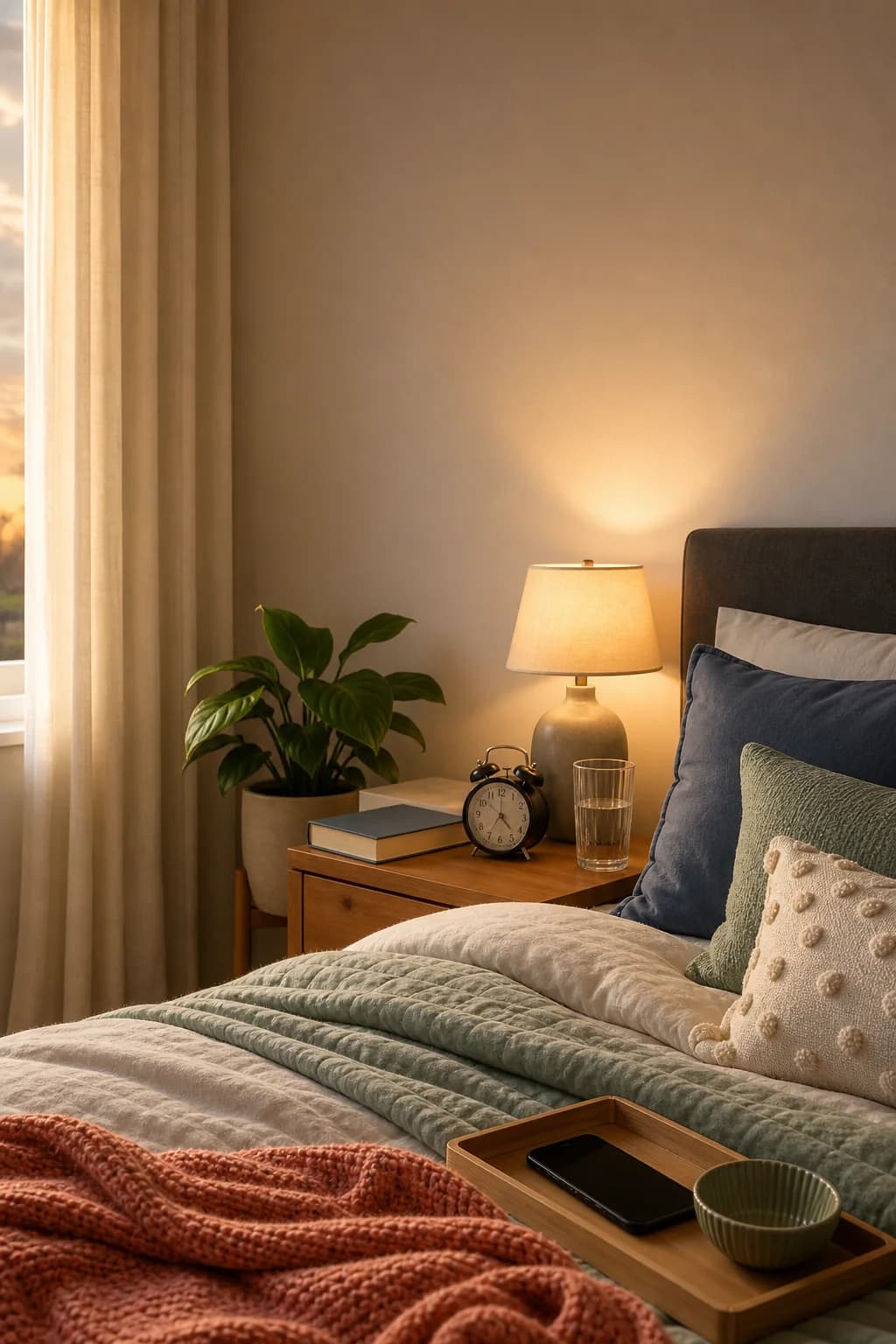
A sleep-friendly bedroom is not necessarily expensive. It is usually darker, cooler, quieter, and less cluttered than the rest of the home. Start with the problem that bothers you most. If light is the issue, improve curtains, eye masks, or device lights. If noise is the issue, try a fan, white noise, earplugs, or rearranging the room. If heat is the issue, look at bedding layers and airflow.
The goal is not a perfect sleep cave. The goal is a room that makes sleep the obvious activity.
Put this into practice
Make your bedroom easier to wind down in by reducing light, noise, clutter, and screen friction one step at a time.
Create a shutdown list
Many people bring unfinished tasks to bed because there is nowhere else to put them. A shutdown list is a simple alternative. Write down open loops, tomorrow's first action, and anything you need to remember. Then leave the list outside the bedroom or away from the bed.
This does not solve every stressful thought, but it creates a container. Instead of rehearsing the same task repeatedly, you have a trusted place to return to tomorrow.
Be careful with late-day friction
Evening choices can make bedtime harder than it needs to be. Heavy late meals, late caffeine, unfinished work, and intense workouts close to bed can all create friction for some people. You do not need strict rules for everything. Notice which patterns affect you and move one of them earlier.
A useful experiment is to change one variable for a week. Move caffeine earlier. Finish work messages earlier. Choose a lighter dinner. Keep the same wake time. One change gives you cleaner information than trying to overhaul everything at once.
Use products only to solve real problems
Buying a sleep product before identifying the problem can lead to clutter and disappointment. A blackout curtain solves light. Breathable sheets may help if you sleep warm. A white noise machine can mask inconsistent sound. A charging station outside the bedroom can reduce phone friction.
Avoid products that add more screens, more decisions, or more pressure unless they solve a specific issue you have already noticed.
Keep the routine compassionate
Sleep is influenced by stress, schedule, environment, health, caregiving, work, and many other factors. A routine can support you, but it should not become another reason to judge yourself. Build the smallest routine that helps: a closing list, dimmer lights, less phone time, and a bedroom that feels calmer.
If problems persist, lifestyle content is not a substitute for medical care. Use basic sleep hygiene as support, not as a diagnosis or treatment plan.