Movement
Daily Movement Plan for Beginners
A beginner-friendly daily movement plan built around ordinary routines, low-energy options, and realistic weekly cues.
By A Healthy World Editorial Team · June 1, 2026 · 8 min read
A daily movement plan for beginners should not start with a full workout calendar. For many people, the first useful goal is simpler: make the day a little less still without depending on gym time, perfect motivation, or a dramatic identity shift.
This plan is educational only and is not medical advice. If movement causes pain, dizziness, unusual shortness of breath, or you have a condition that affects activity, speak with a qualified professional before changing your routine. For everyday planning, the goal here is practical: choose a few repeatable movement anchors and build a week that can survive normal life.
A calmer next step
Get one practical reset each week.
Short routines, useful checklists, and the next guide that fits what you are working on.
Choose movement anchors, not a perfect schedule
A movement anchor is a moment that already exists in your day. Morning coffee, lunch, school pickup, ending work, dinner cleanup, phone calls, errands, and brushing your teeth can all become cues for a small amount of movement. Anchors work because they remove the vague question of when you will get around to it.
For the first week, choose two or three anchors instead of filling every hour with intentions. You might walk after lunch, stretch before your shower, and do a short reset after closing your laptop. The plan should feel almost too simple. That is what makes it repeatable.
- Pick one morning, one midday, or one evening cue.
- Keep each first action short enough for a busy weekday.
- Write a backup version before the week starts.
Use three types of daily movement
A balanced beginner plan can be built from three movement types: walking or light cardio, strength through everyday bodyweight actions, and mobility that keeps joints from feeling neglected. You do not need to do all three every day. You need a small menu you can choose from without overthinking.
Walking might be a five-minute loop, a lunch break, or an errand. Strength might be sit-to-stands from a chair, wall pushups, carrying groceries, or slow stair climbing if that suits your body. Mobility might be gentle neck, shoulder, hip, or ankle movements done between tasks.
Keep the menu small
Beginners often stall because the plan has too many options. Start with one movement in each category. A small menu lowers decision fatigue and makes it easier to notice what actually fits.
A useful starter menu might be: one short walk, one set of chair sit-to-stands, and one two-minute mobility reset. That is enough to learn from.
- Walk: one block, one errand, or one lunch loop.
- Strength: chair sit-to-stands, wall pushups, or gentle step-ups.
- Mobility: shoulders, hips, ankles, or a short stretch break.
Put this into practice
Build one realistic week with small actions, clear cues, and fallback versions for busy days.
Build a realistic seven-day structure
A beginner week does not need seven identical days. It works better when it has practice days, easy days, and review built in. Day 1 is for choosing anchors and clearing friction. Days 2 and 3 are for testing the smallest version. Day 4 is for adjusting the cue. Day 5 is for using movement during a busy day. Day 6 is for the low-energy version. Day 7 is for review.
This keeps the week from becoming a pass-fail streak. You are testing where movement naturally belongs in your life.
- Day 1: choose anchors and put shoes or supplies where you will see them.
- Days 2-3: repeat the smallest useful version.
- Day 4: move the cue if it keeps getting missed.
- Day 5: try movement inside a real-life errand or transition.
- Day 6: use the backup version on purpose.
- Day 7: review what felt easiest to repeat.
Lower friction before adding intensity
Friction is anything that makes movement harder to start: shoes hidden away, an unclear route, no weather plan, a crowded room, a phone that steals the transition, or a plan that requires changing clothes for two minutes of movement. Remove one friction point before asking for more effort.
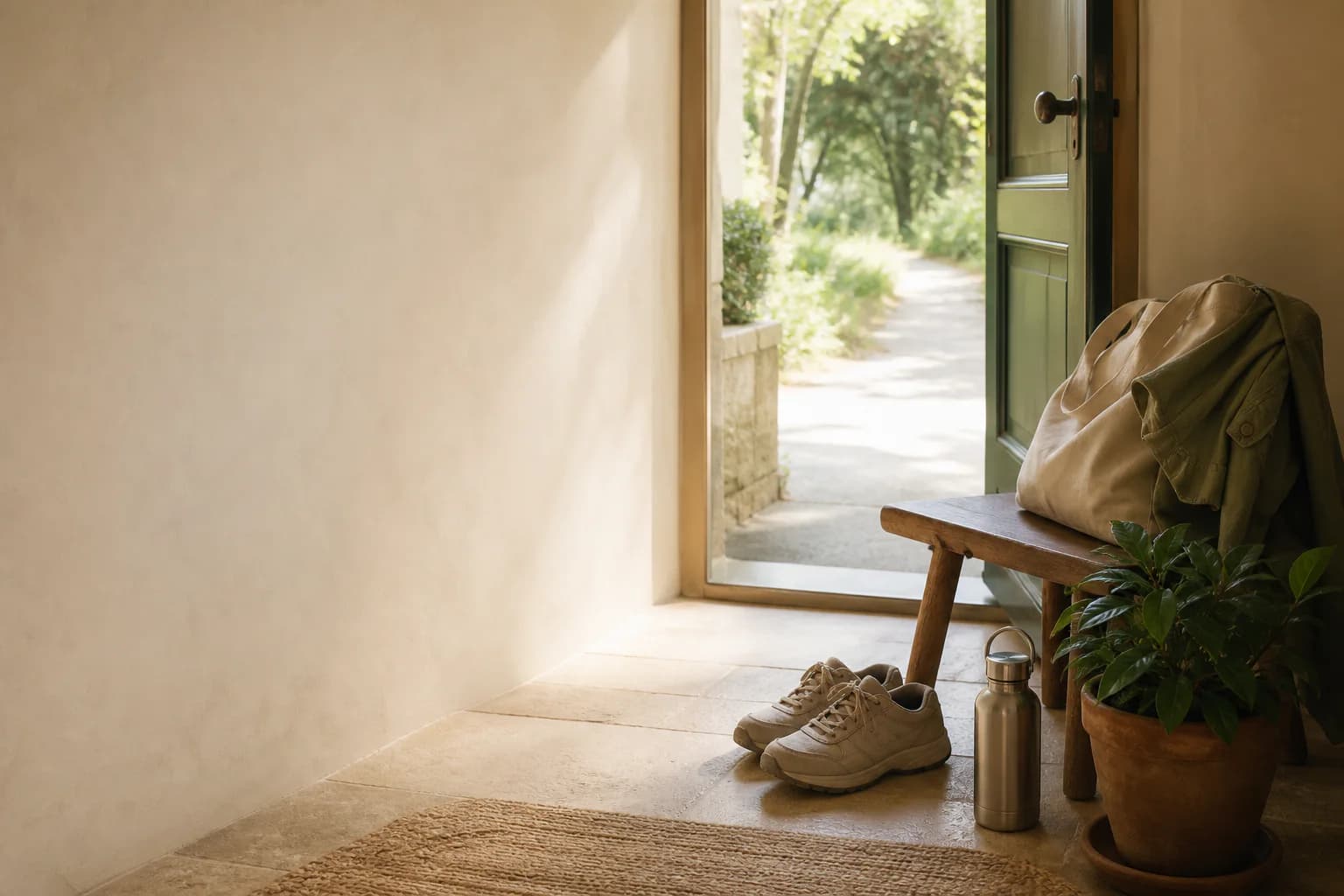
Intensity can come later if you want it. In the beginning, the highest-value upgrade is often placement. Put walking shoes by the door, keep a stretch mat visible, set a calendar reminder after lunch, or choose a route that starts from where you already are.
Make low-energy movement count
A daily movement plan needs a version for tired days. Without one, the first hard day can make the whole plan feel broken. A low-energy version might be two minutes outside, five gentle stretches, one slow lap around the room, or a short walk to the mailbox.
The backup is not a loophole. It is part of the design. It keeps the habit connected to the cue even when the full version is not realistic.
- Two minutes still counts if that is the planned fallback.
- Gentle mobility can count on days when walking is not realistic.
- Restart at the next cue instead of waiting for a new week.
Add movement to tasks you already do
The easiest movement often comes from tasks that already have a reason. Walk one small errand. Take a phone call outside. Do a few sit-to-stands while waiting for tea. Stretch while a file uploads. Add a lap before heading inside after work.
This approach is especially useful if formal exercise feels intimidating or boring. Movement becomes part of life, not a separate performance.
Desk-worker movement ideas
If most of your day happens at a desk, use transitions. Stand for the first two minutes of a call, walk after lunch, stretch shoulders after a meeting, or take a short route before sitting back down. The point is not to turn work into a workout. The point is to interrupt long still blocks with small repeatable actions.
A simple rule can help: one movement cue after every deep-work block or meeting cluster.
Review the week and keep one anchor
At the end of the week, do a short review. Which anchor happened most naturally? Which movement felt useful instead of annoying? Which plan depended on motivation and fell apart? Keep one anchor for next week and simplify the rest.
Progress for beginners is not about proving discipline. It is about finding the version of daily movement that fits well enough to repeat. One reliable anchor can become the base for a stronger routine later.