Healthy Eating
How to Prep Simple Salads for the Week Without Ending Up With Soggy Lunches
A practical salad prep routine with dry greens, separate add-ins, and simple lunch formulas so weekday salads stay easy instead of soggy.
By A Healthy World Editorial Team · July 16, 2026 · 8 min read
Salad prep sounds healthy and organized until it turns into a fridge full of wet greens, watery cucumbers, and lunches you are already tired of by Tuesday. A lot of the frustration comes from treating salad like one finished product that should survive the whole week in perfect condition. A better system is smaller. It keeps a few parts ready, stores the wettest ingredients separately, and makes it easy to build a simple lunch in two minutes instead of forcing five identical bowls on Sunday.
This article is educational only and is not a substitute for food safety guidance for your situation. FDA advises washing produce under running water before preparing or eating it, while bagged greens labeled pre-washed or ready-to-eat can be used as sold. USDA guidance also notes that leafy greens keep best in a dry spot in the refrigerator and are usually best used within a few days. If you add cooked grains, beans, eggs, chicken, or other perishable meal parts, FoodSafety.gov guidance on prompt refrigeration, shallow storage, and using leftovers within 4 days still applies. The goal here is practical: make simple salads easier to repeat without turning lunch prep into a soggy container project.
A calmer next step
Get one practical reset each week.
Short routines, useful checklists, and the next guide that fits what you are working on.
Build salad prep around parts, not five finished bowls
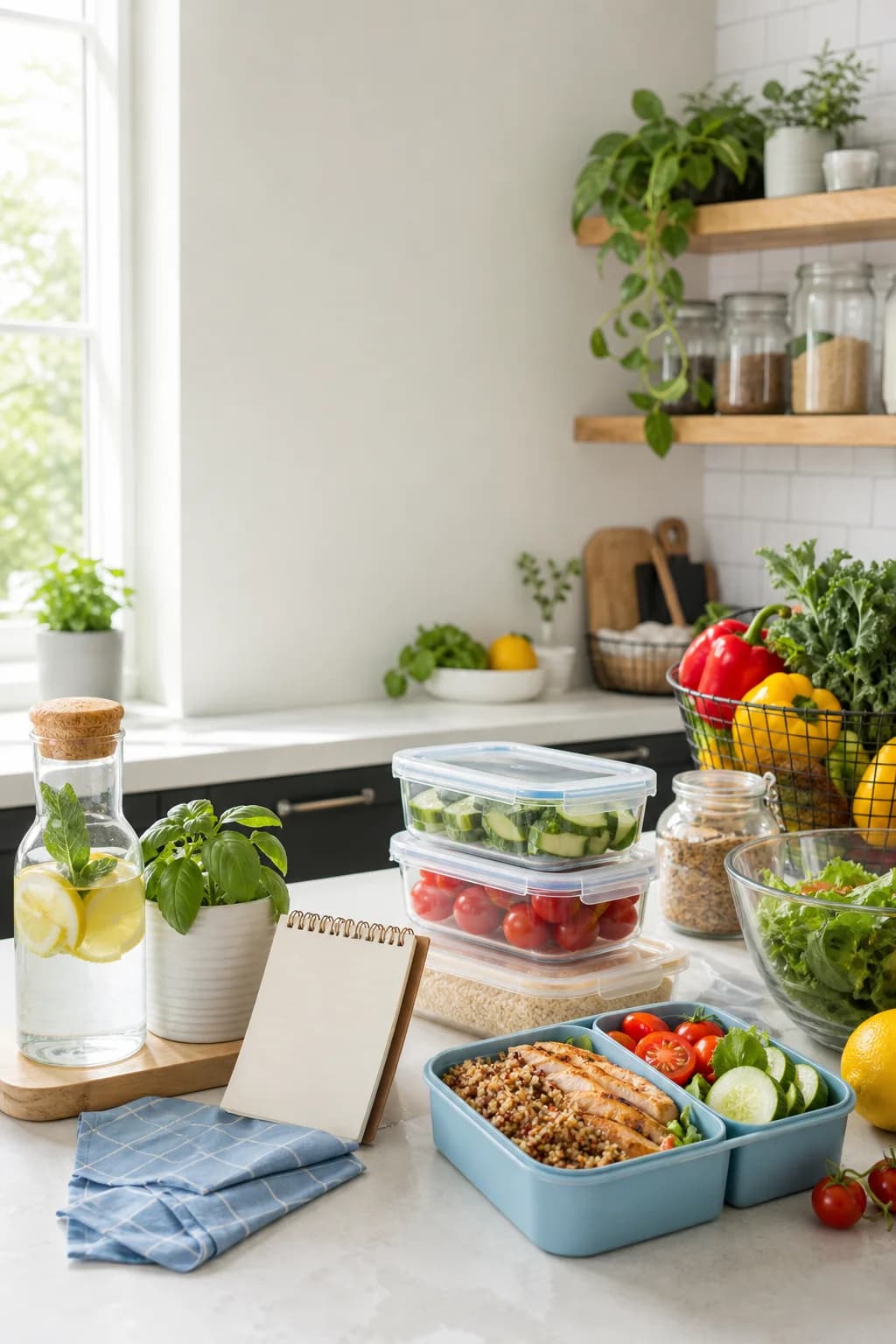
The biggest salad-prep mistake is finishing every lunch at once. Once everything is chopped, dressed, and fully combined, the clock starts running on texture. Greens slump, juicy vegetables leak, crunchy toppings soften, and the lunch starts feeling less appealing long before it is technically unusable. A more reliable approach is prepping parts with different moisture levels and combining them closer to eating time.
This also makes salads easier to adapt during the week. One container of washed greens can become a desk lunch one day and a dinner side another day. A batch of chopped vegetables can move into wraps, grain bowls, or snack plates if you stop wanting salad. That flexibility matters because the best meal prep is not the version that looks most complete on day one. It is the version you still want to use on day three.
- Prep salad components in separate groups instead of finishing every bowl at once.
- Keep the base, wet add-ins, protein, and crunch in their own lanes.
- Let weekday assembly stay small and fast.
The four-part salad system
Most weekday salads get much easier when you can see the same four categories every time you open the fridge.
- A dry green base such as romaine, spinach, cabbage mix, or spring mix.
- A few sturdy vegetables such as carrots, peppers, radishes, or chopped broccoli.
- One filling add-in such as beans, grains, eggs, chicken, tofu, cheese, or lentils.
- One separate topper such as seeds, nuts, croutons, or dressing.
Choose greens and vegetables that match the number of days you need
Not every salad ingredient is trying to do the same job. Tender greens can work well for the first part of the week, while sturdier ingredients such as romaine, cabbage, kale, carrots, and peppers usually hold up better for longer. If you know you want salads through Thursday or Friday, build the plan around ingredients that can survive that timeline instead of expecting delicate greens and watery vegetables to stay appealing indefinitely.
This is why a two-stage plan often works better than a seven-day fantasy. Use the most delicate greens first, then lean on sturdier vegetables, slaw mixes, or backup lunch formats later in the week. A salad routine gets easier when the ingredients have realistic jobs.
- Use delicate greens earlier in the week.
- Use sturdier vegetables and slaw-style bases for later lunches.
- Plan only as many salad days as your ingredients can realistically support.
Put this into practice
Make weekday meals easier with default meals, visible food, and low-energy backups.
Keep greens dry and keep the wettest ingredients separate
USDA guidance notes that leafy greens keep better in a dry place in the refrigerator, and that one detail fixes a lot of salad-prep problems. Wet greens break down faster, and watery ingredients accelerate the slide. If you wash whole produce yourself, dry it well before storing. If you buy ready-to-eat greens, keep the bag or container cold and avoid adding moisture to it unless you are using it right away.
The same logic applies to the ingredients most likely to leak: tomatoes, cucumbers, juicy fruit, pickled items, and dressings. Those foods are useful, but they are better stored separately until the day you plan to eat them. Small separation now saves a lot of disappointment later.
- Dry washed greens thoroughly before storing them.
- Keep tomatoes, cucumbers, fruit, pickled items, and dressing out of the main salad box.
- Use a paper towel or other moisture-control step only if it genuinely helps your greens stay drier.
What to wash now and what to leave alone
FDA says produce should be washed under running water before preparing or eating, and pre-washed greens labeled ready-to-eat can be used without another wash. In practice, that means you do not need to rewash every packaged green, but you do need a clear plan for the produce you are washing yourself.
- Wash whole produce you plan to cut and use soon.
- Use pre-washed greens as labeled instead of overhandling them.
- If you wash produce before storage, dry it thoroughly first.
Prep two or three repeatable salad formulas instead of chasing variety
Many people make salad prep harder by planning five unique lunches. That sounds interesting, but it usually creates too many ingredients, too much chopping, and more forgotten produce. A smaller system uses two or three formulas built from overlapping parts. One might be greens, beans, peppers, and seeds. Another might be slaw mix, chicken, carrots, and crunchy topping. A third might be spinach, grains, roasted vegetables, and dressing packed separately.
Repeating the structure lowers friction without making lunch feel identical. The base can change, the protein can rotate, and the crunch can shift, but the assembly stays familiar. That is what makes the routine realistic on a weekday morning.
- Pick two or three salad combinations for the week.
- Reuse ingredients across those combinations whenever possible.
- Let one backup lunch replace the fifth salad instead of forcing more prep.
Use containers that fit assembly, commute, and fridge visibility
A salad system works better when the containers match how you actually eat. One large box of dry greens can be useful at home, while lunch-sized containers may make more sense for commuting or office fridges. A small separate cup for dressing or crunchy toppings often matters more than owning a trendy salad jar.
The goal is not a pretty stack. It is being able to see the parts, grab them quickly, and keep the wet elements separate until lunch. If a container makes assembly or transport annoying, the salad habit becomes more fragile no matter how healthy the ingredients are.
- Keep the main greens and meal parts visible in the fridge.
- Use separate small containers for dressing and crunchy toppings.
- Choose lunch containers that fit your actual commute and refrigerator space.
Treat cooked proteins and grains like leftovers, not like shelf-stable salad extras
Salad prep often includes cooked chicken, roasted vegetables, grains, pasta, eggs, or beans. Those ingredients can make lunch more filling, but they also need the same care as the rest of your meal prep. FoodSafety.gov recommends refrigerating perishable foods within 2 hours, using small shallow containers when cooling leftovers, and using cooked leftovers within 4 days.
That matters because a salad can look fresh while one of its meal parts is already too old or was left out too long during prep. If you are making several lunches with cooked add-ins, label them clearly enough that you do not have to guess later in the week.
- Refrigerate cooked add-ins promptly after prep.
- Cool leftovers in smaller, shallower storage when needed.
- Use cooked proteins and grains on a shorter timeline than dry greens and raw vegetables.
Run a 15-minute salad reset instead of a giant Sunday prep block
You do not need an elaborate batch-cooking session to make weekday salads easier. A short reset is usually enough: choose the greens, wash or portion the vegetables, prep one filling add-in, and set out a dressing or crunch option. That gives you several easy lunches without creating five finished containers that may not age well.
A short salad reset also reveals whether the problem is ingredient choice, storage, or simply trying to prep too many days ahead. If lunch gets easier by Monday and Tuesday, the system is already working.
A simple 15-minute checklist
Keep the prep block small enough that you would still do it on a normal week.
- Choose two salad formulas and one non-salad backup lunch.
- Prep or portion one green base and two sturdy vegetables.
- Add one filling protein, bean, grain, or egg option.
- Pack dressing and crunch separately.
- Put the use-first salad parts where you will see them first.
Common mistakes that turn salad prep into wasted produce
One common mistake is dressing everything in advance because it feels more complete. Another is using only delicate ingredients for a full workweek. A third is making salads with no real lunch job, so they sit in the fridge while something easier wins.
Another trap is forgetting that salads still need enough substance. If lunch is only lettuce and good intentions, it will not feel reliable. A salad routine lasts longer when it includes a filling add-in, a clear storage plan, and an easier backup for the days when a full salad is not appealing.
- Do not dress the whole week of salads in advance.
- Do not expect wet ingredients and tender greens to behave like sturdy leftovers.
- Do not prep more salad days than you realistically want to eat.
- Do not skip a filling protein, grain, bean, or backup lunch option.
Make salad prep small enough to keep using
A useful salad-prep system is not five perfect mason jars. It is dry greens, a few sturdy vegetables, one filling add-in, separate dressing, and a lunch setup that still feels easy on Wednesday. When the pieces are visible and the wet ingredients stay in their own lane, salad becomes a practical weekday option instead of an aspirational one.
Start with two salads this week, not seven. Keep the ingredients that stay easy to use, drop the parts that get soggy or annoying, and let the routine become simpler over time. If lunch feels easier and less wasteful, the prep is doing its job.
- Prep components instead of finishing every bowl.
- Keep greens dry and wet ingredients separate.
- Use sturdy ingredients for later-week lunches.
- Treat cooked add-ins like leftovers with real timelines.
- Keep one backup lunch so salad never has to carry the whole week.