Healthy Eating
How to Set Up a Simple Meal Prep Container System Without Buying a Giant Set
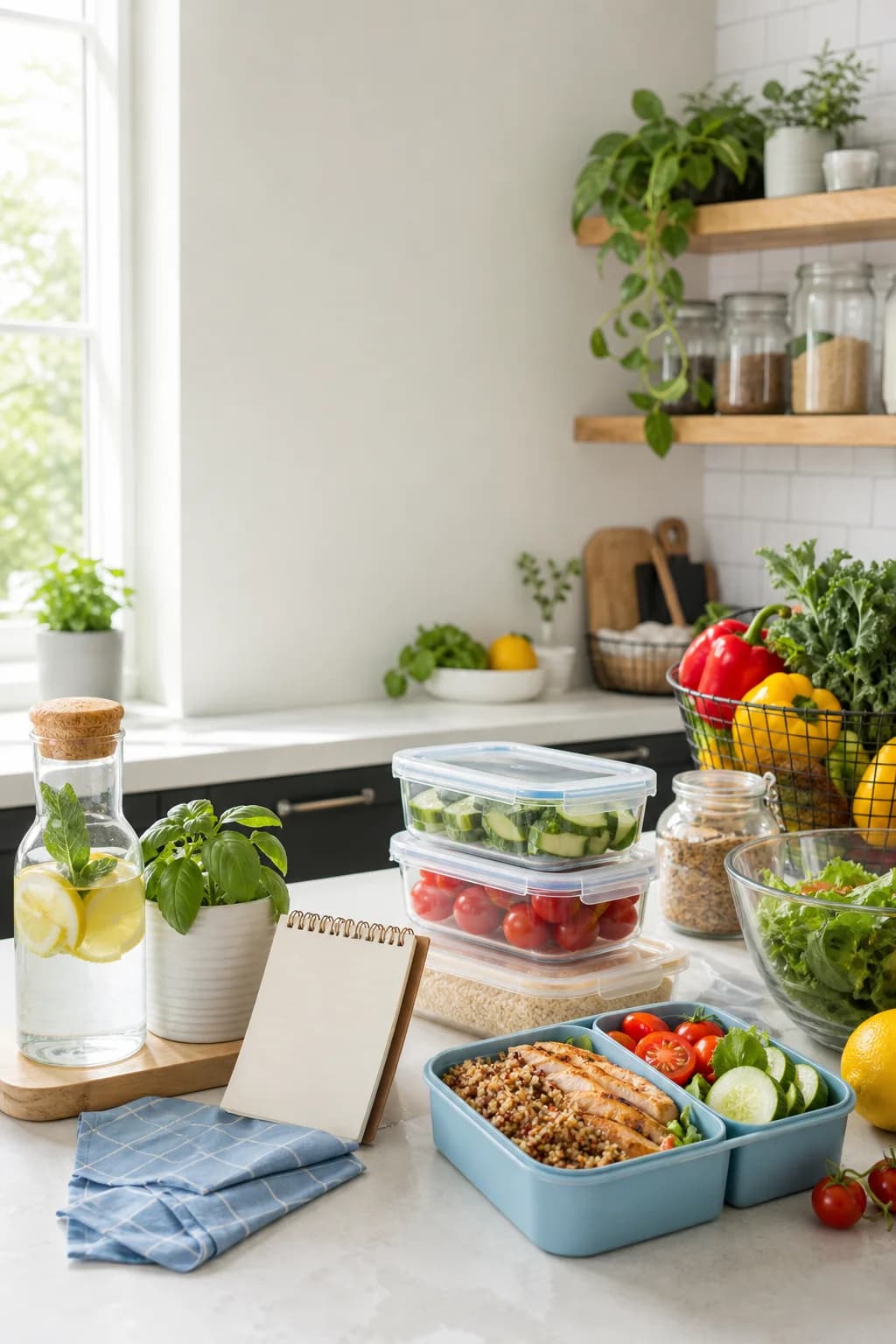
A practical meal prep container system for leftovers, lunch packing, and freezer portions without buying a giant matching set.
By A Healthy World Editorial Team · July 15, 2026 · 8 min read
Meal prep containers are easy to overcomplicate. One article says you need a full matching set. Another makes it look like healthy eating depends on color-coded lids, stacked glass towers, and a drawer that never gets messy. Then real life steps in: the containers are too big, too heavy, missing lids, awkward for lunch, or so scattered that leftovers stay in the pan because finding the right size feels like another chore. A better system is much smaller. It gives a few containers clear jobs so storing food becomes easier than ignoring it.
This article is educational only and is not a substitute for food safety guidance for your situation. FDA and FoodSafety.gov recommend keeping the refrigerator at 40 F or below, refrigerating perishable food within 2 hours or within 1 hour in very hot conditions, and using shallow containers so leftovers cool more quickly. FoodSafety.gov also advises using cooked leftovers within 4 days. The goal here is practical: build a container setup that makes healthy eating, lunch packing, and leftover use easier without turning storage into another shopping project.
A calmer next step
Get one practical reset each week.
Short routines, useful checklists, and the next guide that fits what you are working on.
Start with the jobs your containers actually need to do
A container system works better when it is organized around repeated jobs instead of matching aesthetics. In most kitchens, the same few moments come up again and again: storing tonight's leftovers, packing tomorrow's lunch, keeping one or two meal parts visible in the fridge, and freezing a backup portion before it gets forgotten. When containers are chosen for those jobs, the system gets easier fast.
This also keeps the drawer from filling with sizes you admire but never reach for. A giant tub may look efficient, but it is often too bulky for lunch and too deep for quick cooling. Tiny containers may be cute, but they can multiply clutter if they do not solve a real packing or storage problem. Start with function, then let appearance be secondary.
- Name the three or four storage jobs that come up every week.
- Choose containers for those jobs before buying more.
- Let repeat use decide what belongs in the system.
The three jobs most kitchens need first
Many households do not need an elaborate container collection. They need a simple spread of sizes that make the next meal easier.
- Lunch-sized containers for leftovers, grain bowls, or packed lunches.
- Shallow medium containers for dinner extras, chopped produce, or meal parts.
- Small containers for sauces, snacks, cut fruit, or parts that travel separately.
Build the starter set from what you already own
Before buying a giant set, pull out the containers you already have and sort them by job. You may already own enough useful pieces, but they are hidden by duplicates, broken lids, novelty sizes, or containers that are too inconvenient to reach for. A smaller working set is usually more useful than a larger chaotic one.
This is also the easiest way to see what the real gap is. Maybe you do not need more containers at all. Maybe you only need two lighter lunch containers, a few smaller snack cups, or one freezer-friendly shape that stacks better than the rest. The buying decision becomes clearer once the working pieces are obvious.
- Pull out every food container and lid once.
- Match the pieces you actually use and set the rest aside.
- Keep the system small enough that putting containers away stays easy.
A realistic starter count
For many people, a practical starter system is smaller than expected. The goal is coverage, not abundance.
- Three lunch-ready containers in the size you use most.
- Two or three shallow medium containers for leftovers and meal parts.
- Two or three small containers for snacks, fruit, dressings, or add-ons.
Put this into practice
Make weekday meals easier with default meals, visible food, and low-energy backups.
Match the container to the route, not the photo
The right container depends on where the food is going next. A glass container may work well for home leftovers you reheat in the microwave. A lighter container may be easier if you carry lunch on foot, by bike, or on public transit. A flatter freezer container may be better than a bulky round one if you want the freezer to stay readable.
This is where many container systems quietly fail. People buy for the fantasy setup instead of the route the food actually takes. The better question is not which container looks most organized. It is which one makes the trip from dinner to fridge, lunch bag, office, freezer, or reheating easiest.
- Use lighter pieces for long commutes if heavy containers become annoying.
- Use shallow shapes for leftovers you want to cool and stack quickly.
- Use freezer-friendly shapes that are easy to label and recognize later.
Keep one grab-and-go zone for containers, lids, and lunch gear
A container system is only useful if the pieces live where the next action happens. If lunch containers are in one cabinet, lids are in another, and the lunch bag is somewhere else entirely, packing food still feels harder than it should. A better setup keeps the core pieces close together so storing and packing are fast enough for ordinary weekdays.
This can be one drawer, one shelf, or one small cabinet section. The goal is not a perfect organizer insert. The goal is reducing the number of steps between noticing leftovers and turning them into tomorrow's lunch.
- Keep your most-used containers together instead of scattered by size.
- Store matching lids in the same zone or immediately beside it.
- Keep the lunch bag, ice packs, and small snack containers nearby if you pack food for work.
A five-minute weekly reset
Most container clutter comes from drift, not from one dramatic mess. A short reset once a week keeps the system usable.
- Match the loose lids that collected near the sink or dishwasher.
- Return the three or four most-used containers to the front.
- Remove one broken, warped, or awkward piece instead of shuffling it again.
Use shallow containers and quick labels for perishable foods
Food safety still matters more than aesthetics. FDA and FoodSafety.gov say perishable foods should be refrigerated within 2 hours, or within 1 hour if they have been in temperatures above 90 F. They also recommend shallow containers so leftovers cool faster. That means the container system should help you move food out of hot pans, deep bowls, or takeout tubs and into practical storage quickly.
A label helps almost as much as the container itself. If you cannot tell whether something is taco filling, roasted vegetables, cooked rice, or pasta sauce, it stops feeling trustworthy by the second or third day. A plain label with the food name and date makes the fridge easier to scan and supports the FoodSafety.gov reminder to use cooked leftovers within 4 days.
- Move perishable leftovers into the fridge promptly.
- Use shallow containers for foods that need to cool faster.
- Label the containers that are easiest to forget or confuse.
Let the system support fridge visibility instead of hiding food
Containers should make food easier to notice, not easier to forget. If every useful item gets packed into opaque tubs and stacked behind drinks or condiments, the system becomes neat but not helpful. A better approach is to keep the foods you want to use soon in visible, realistic portions that can become lunch, dinner, or snacks without another round of work.
This is especially useful for leftovers, cut produce, cooked grains, proteins, and default meal parts. A fridge becomes easier to trust when the container answers three questions quickly: what is it, when was it stored, and what could it become next.
- Keep one visible zone for leftovers and prepared meal parts.
- Store tomorrow's lunch where you will see it first.
- Use realistic portions instead of one oversized container that feels like a commitment.
Create a low-energy version for busy weeks
A good container system needs a minimum version, not just the ideal version. Some weeks you will not portion snacks, freeze extras, or run a full reset. That does not mean the system failed. It means the system needs a short version that still keeps food usable.
The low-energy version may be as simple as storing one lunch portion after dinner, labeling one leftover, and keeping one freezer backup in a recognizable container. If those three actions happen, the container system is still doing its job.
A minimum version that still works
Keep the fallback small enough that it happens on a tired Wednesday, not just on your best Sunday.
- Pack one lunch-sized leftover before finishing kitchen cleanup.
- Label one container that would otherwise become a mystery.
- Freeze one extra portion early if you already know the week is too full.
Common mistakes that make container systems fail
One common mistake is buying the full set before knowing which sizes the kitchen actually needs. Another is keeping too many shapes that do the same job badly. A third is treating container storage like a separate organization hobby instead of something that should make eating easier this week.
Another trap is letting the container step become bigger than the meal step. If storing leftovers feels like a project, the food stays in the pot. If packing lunch means hunting for lids, you skip it. The right system is the one that makes small useful actions easier to repeat, not the one that looks most complete in the cabinet.
- Do not buy a giant set before sorting what you already own.
- Do not keep deep or awkward pieces that make cooling and stacking harder.
- Do not let lids, drawers, or organizer bins become more complicated than the meals.
Keep the system small enough to repeat
A practical meal prep container system is not about owning the most containers. It is about making leftovers easier to cool, lunch easier to pack, meal parts easier to see, and freezer backups easier to remember. That usually comes from a few repeated sizes, one clear storage zone, quick labels, and a short weekly reset.
Start this week with the smallest useful version. Choose the containers you reach for most, give them clear jobs, and remove the pieces that make the drawer harder to use. If the next lunch or leftover feels easier, the system is working.
- Choose your three most useful container jobs.
- Keep a small working set easy to grab.
- Use shallow storage and quick labels for perishable foods.
- Review the week before buying more.