Healthy Eating
Easy Ways to Make Your Kitchen Healthier
Practical kitchen changes that make healthy eating easier with visible staples, default meals, smarter leftovers, and simple meal prep routines.
By A Healthy World Editorial Team · May 27, 2026 · 7 min read
A healthier kitchen is not defined by expensive appliances or a fridge full of unfamiliar ingredients. It is defined by friction. Does the kitchen make useful food easy to see, prepare, store, and repeat? Or does it hide the helpful options while making takeout feel like the only realistic answer?
You can improve your kitchen without a full reset. Start with visibility, simple staples, food storage, and one or two repeatable meals.
A calmer next step
Get one practical reset each week.
Short routines, useful checklists, and the next guide that fits what you are working on.
Move useful food into view
People eat what they can see and reach. Put fruit on the counter if it keeps well there. Move chopped vegetables, yogurt, leftovers, or prepared grains to eye level in the fridge. Put less useful snacks in a less prominent spot rather than relying on constant self-control.
This is not about banning foods. It is about making the choice you want to repeat easier to notice.
Build a small staple list
A short staple list reduces the weekly question of what to buy. Choose foods that can become several meals: eggs, beans, lentils, oats, rice, potatoes, frozen vegetables, greens, canned tomatoes, yogurt, nuts, fruit, olive oil, and simple sauces or spices you enjoy.
The exact list depends on your preferences and culture. The principle is the same: keep useful ingredients that can become a meal without a complicated recipe.
Put this into practice
Make weekday meals easier with default meals, visible food, and low-energy backups.
Create one default meal
A default meal is a meal you can make when you are busy and tired. It should be flexible, familiar, and fast. Think grain bowl, omelet and toast, soup with beans, yogurt with fruit and nuts, pasta with vegetables, or leftovers turned into a wrap.
The default meal protects you from the moment when hunger and decision fatigue meet. It is not supposed to be perfect. It is supposed to be reliable.
Use containers to reduce waste
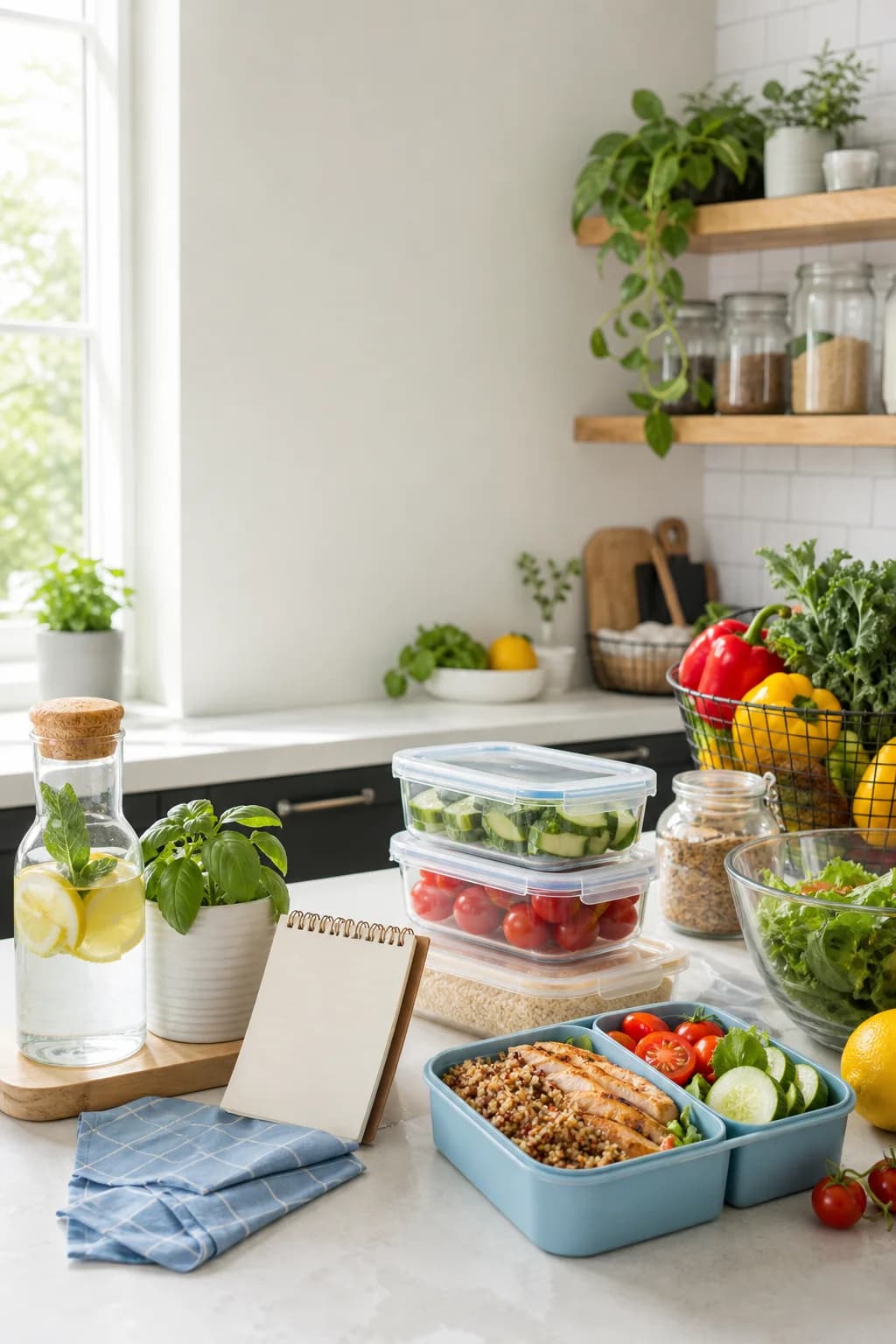
Good storage helps healthy eating because it makes leftovers visible and portable. Clear containers can remind you what is available. Smaller containers make snacks easier to pack. Freezer-safe containers keep extra portions from spoiling.
If your container drawer is chaotic, start there. Match lids, remove broken pieces, and keep the sizes you actually use. A smaller functional set beats a large messy one.
Set up a prep zone
You do not need to meal prep every meal. A prep zone can simply mean keeping a cutting board, knife, containers, and commonly used ingredients easy to access. When the tools are ready, chopping vegetables or packing leftovers feels less like a project.
If you have limited space, create a small tray or shelf for prep basics. The goal is to reduce the number of steps between intention and action.
Make sustainable choices practical
A healthier kitchen can also waste less. Plan one meal around ingredients that need using. Store herbs properly. Freeze extra bread. Keep a container for odds and ends that can become soup, fried rice, or a snack plate.
Sustainable eating is often less about perfect products and more about using what you buy.
Change one shelf this week
Do not reorganize the entire kitchen unless you want to. Choose one shelf, drawer, or habit. Move useful food into view, create one default meal, or sort your containers. Small kitchen systems compound because they affect choices every day.