Healthy Eating
Healthy Kitchen Checklist for Busy Weeks
A practical healthy kitchen checklist for busy weeks with visible staples, one default meal station, smarter storage, and a free printable for weekly prep.
By A Healthy World Editorial Team · June 1, 2026 · 8 min read
A healthy kitchen checklist should make the next meal easier, not turn your cabinets into a staged pantry photo. Busy weeks need visibility, repeatable meals, practical storage, and a few low-energy backups. The goal is a kitchen that helps when you are tired, hungry, and short on time.
Use this checklist as a friction audit. You are not trying to buy a perfect kitchen. You are looking for the places where useful food gets hidden, leftovers get forgotten, prep tools are annoying to reach, or the easiest option becomes takeout because the kitchen has too many small obstacles.
A calmer next step
Get one practical reset each week.
Short routines, useful checklists, and the next guide that fits what you are working on.
Make useful food easy to see
Start with visibility. People are more likely to use food that is easy to notice and reach. Put fruit, yogurt, chopped vegetables, leftovers, cooked grains, or ready-to-use staples where they will catch your eye. Move the items that need using first to one obvious shelf or bin.
This is especially helpful during busy weeks because decision fatigue is real. If the food that supports your routine is buried behind mystery containers, it might as well not exist.
- Create one use-it-first shelf in the fridge.
- Put quick meal staples at eye level in the pantry.
- Keep a short list of food that needs using before the next shop.
Build one default meal station
A default meal is the meal you can make when energy is low. It should use familiar ingredients and require very little decision-making. Think wraps, grain bowls, omelets, soup with beans, yogurt bowls, pasta with vegetables, or leftovers turned into a snack plate.
A meal station keeps the parts together. If wraps are your default lunch, keep tortillas, beans or protein, sauce, greens, and containers easy to reach. If breakfast bowls are the default, group oats, yogurt, fruit, nuts, or freezer options.
Choose meals by repeatability
The best default meal is not the healthiest-looking recipe. It is the one you will actually repeat on a normal weekday. Start with meals you already eat, then make them easier to assemble.
Once one default meal works, add a second. Two reliable meals can change the whole week.
- Pick one breakfast, lunch, or dinner that could repeat twice this week.
- Write the ingredients it needs every time.
- Move those ingredients into a visible zone.
Put this into practice
Make weekday meals easier with default meals, visible food, and low-energy backups.
Set up containers before you need them
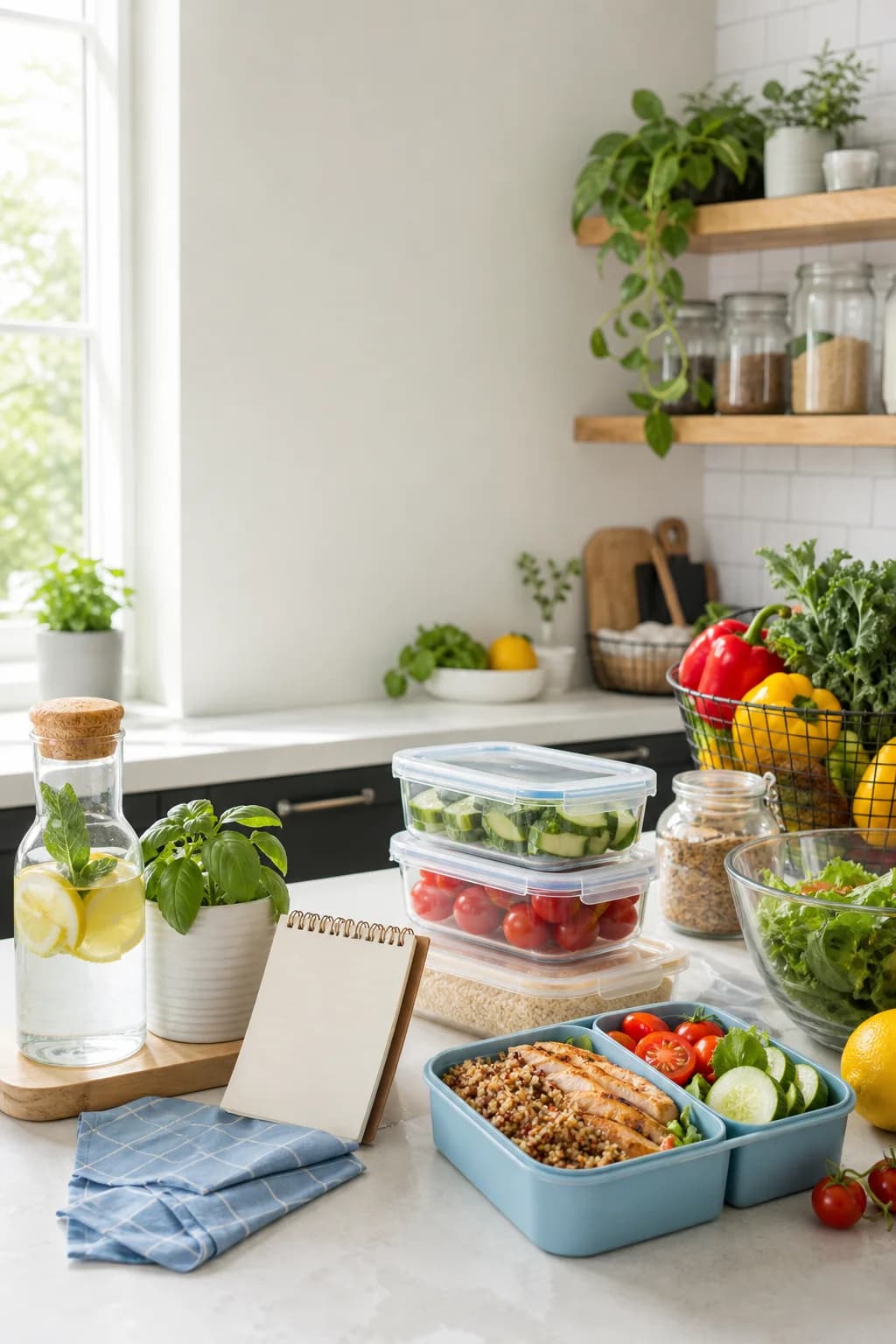
Storage is part of healthy eating because it decides whether leftovers become tomorrow's lunch or disappear until they spoil. Match lids, remove broken containers, and keep the sizes you actually use. Clear containers help with visibility, but a smaller organized set is more useful than a huge messy drawer.
If you pack lunch or save leftovers, make the container decision easy. Keep lunch-sized containers, snack containers, and freezer-safe options where they are quick to grab.
- Match lids and containers once before the week starts.
- Keep three lunch-ready containers together.
- Label freezer meals with the food and date if they are easy to forget.
Create a small prep zone
A prep zone reduces the number of steps between intention and action. It can be a counter corner, a tray, or one reachable drawer with a cutting board, knife, measuring cup, containers, and the tools you use most often. The point is not a professional setup. The point is making a five-minute prep task feel possible.
Busy-week prep is often about components, not full meals. Wash fruit, cook one grain, portion snacks, chop one vegetable, make one sauce, or store leftovers in meal-sized containers. Small prep counts.
Keep low-energy backups visible
Backups protect the week from the first tired night. A useful backup might be frozen soup, canned beans, eggs, whole-grain toast, pasta, frozen vegetables, tuna, hummus, or a shelf-stable lunch option. The backup is not a failure. It is what keeps the routine from turning into a takeout scramble.
Put backups where you can find them quickly. If they are hidden behind aspirational ingredients, they will not help when the day gets crowded.
- Keep one freezer backup and one pantry backup.
- Write two meals you can make in 10 minutes.
- Restock backups after using them, not after the cabinet is empty.
Reduce food waste with one weekly reset
A healthy kitchen also wastes less food. Once a week, check what is open, what is close to spoiling, and what can become a meal. Move those items into the use-it-first area and build one dinner or lunch around them.
This habit connects health, budget, and sustainability without needing a separate system. Using what you already bought is often the most practical healthy-kitchen upgrade.
A 10-minute reset checklist
Do a quick fridge scan, move leftovers forward, freeze anything you cannot use soon, and write one meal idea from what is already available. Then check containers and prep tools so the next meal is easier to start.
The reset should be short enough that you will repeat it. If it becomes a full clean-out project, it is less likely to happen during a busy week.
Keep the checklist small enough to repeat
A kitchen checklist works when it becomes a weekly rhythm. Start with one shelf, one default meal, one container reset, and one backup meal. That is enough to lower friction without adding another big chore.
After a week, notice what helped: visible food, easier packing, fewer forgotten leftovers, or less takeout. Keep the useful part and ignore the parts that were just kitchen theater.