Healthy Eating
Meal Prep for Beginners: One Realistic Week
A beginner-friendly meal prep plan for one realistic week, built around default meals, visible staples, safer leftovers, packed lunches, and low-energy backups.
By A Healthy World Editorial Team · May 31, 2026 · 8 min read
Meal prep for beginners should not start with a full fridge makeover or a Sunday cooking marathon. Most people need a smaller system: a few useful staples, one or two default meals, and a way to make tomorrow easier when energy is low.
This one-week approach is designed for normal kitchens and normal schedules. It helps you decide what to prep, what to leave flexible, which leftovers need a clear route, and how to avoid turning food into another all-or-nothing project.
A calmer next step
Get one practical reset each week.
Short routines, useful checklists, and the next guide that fits what you are working on.
Start with meals you already eat
The easiest beginner meal prep does not require a brand-new menu. Look at meals you already repeat and make them easier. If you often eat yogurt, build a simple breakfast station. If you make wraps, prepare fillings. If you rely on rice bowls, cook one base and one protein or bean option.
This keeps the routine familiar. A meal prep plan built around unfamiliar recipes asks you to learn too many things at once.
- Choose one breakfast, one lunch, or one dinner to make easier.
- Write the ingredients that meal needs every week.
- Prep only the pieces that reduce weekday friction.
Create one default meal
A default meal is the meal you can make when you are busy and tired. It should be flexible enough to repeat without feeling rigid. Examples include grain bowls, eggs and toast, soup with beans, salad plus leftovers, pasta with vegetables, or a snack plate with protein and fruit.
The goal is not culinary perfection. The goal is having an answer before hunger and decision fatigue take over.
Put this into practice
Make weekday meals easier with default meals, visible food, and low-energy backups.
Prep ingredients, not every meal
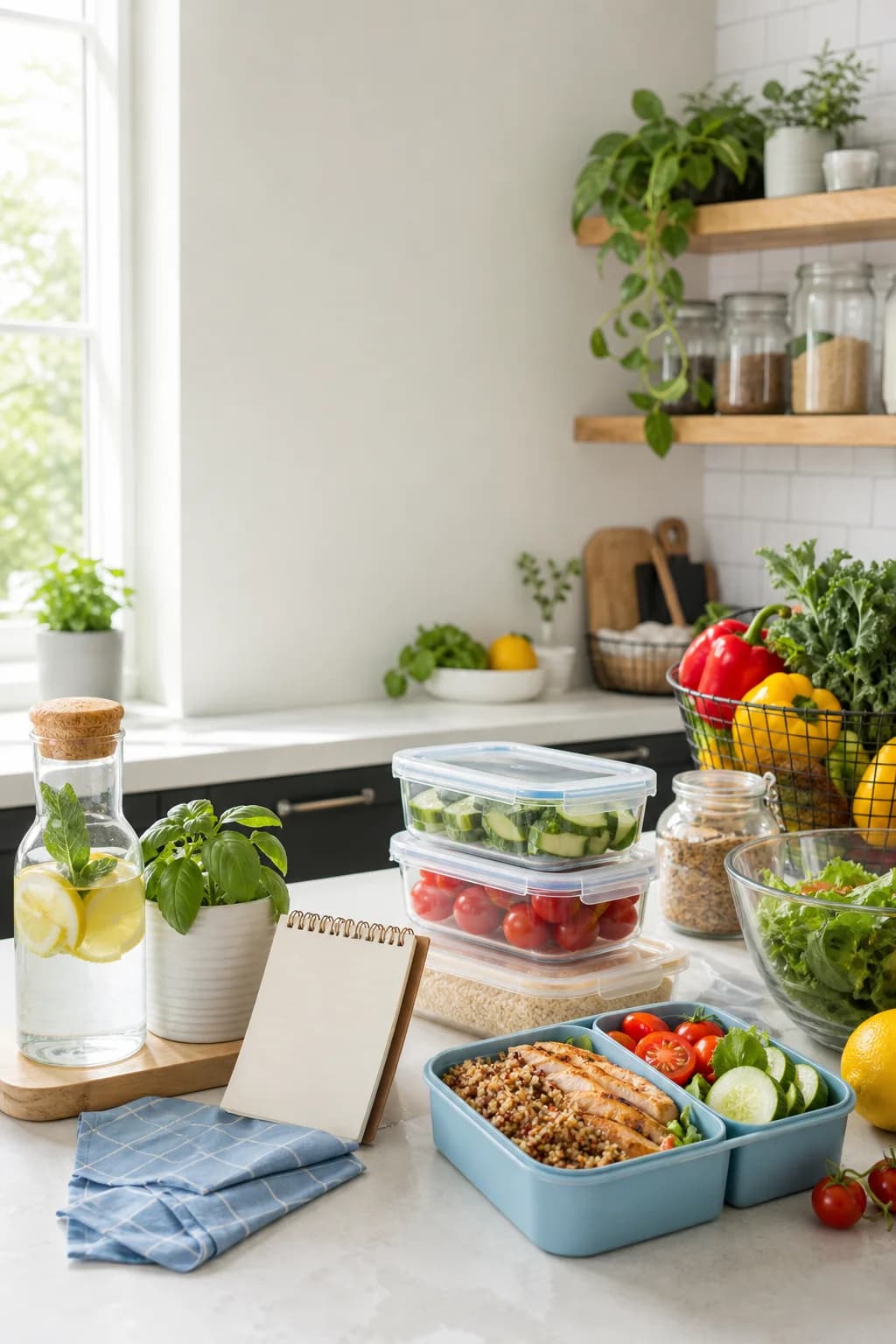
Many beginners think meal prep means cooking complete meals into identical containers. That can work, but it is not the only option. Ingredient prep is often easier: wash greens, cook grains, portion snacks, chop vegetables, boil eggs, or make one sauce.
This gives you flexible building blocks. You can assemble different meals without starting from zero each time.
Keep visibility high
Prepared food only helps when you can see it. Use clear containers if you have them, put ready-to-eat foods at eye level, and label anything that might disappear into the freezer.
The best storage setup is not necessarily the prettiest one. It is the one that reminds you what is available before you order food or buy duplicates.
Plan low-energy backup meals
A realistic meal prep plan needs backup meals. These are options you can assemble when the original plan falls apart: eggs and toast, frozen vegetables with rice, canned beans with tortillas, yogurt with fruit, soup from pantry staples, or leftovers turned into a wrap.
Backups are not failures. They are part of the system. They make the week more resilient.
- Keep two pantry backup meals available.
- Choose one freezer option that prevents takeout by default.
- Write the backup list before the week gets busy.
Review what actually got eaten
At the end of the week, look at what you used, what you ignored, and what spoiled. That review tells you how to adjust. Maybe you prepped too much. Maybe the containers were hard to find. Maybe the default meal was not appealing enough.
Beginner meal prep improves through small changes. Keep the pieces that made weekdays easier and remove anything that created extra work.