Healthy Planet
How to Start Using Cleaning Refills Without Making Chores Harder
Start using cleaning refills with a simple refill station, safer-use reminders, less cabinet clutter, and a low-waste chore routine that stays usable.
By A Healthy World Editorial Team · June 2, 2026 · 8 min read
Cleaning refills can sound like an easy sustainable swap until they turn into a shelf full of tablets, concentrates, unlabeled bottles, and one more household system to manage. The useful version is much simpler. A refill should make a repeated cleaning job easier to restock, easier to store, and slightly less wasteful than buying a new bulky bottle every time, especially when it connects to the low-waste routines you already maintain.
This article is educational only and is not a substitute for product labels or household safety guidance for your situation. If you use antimicrobial or disinfecting products, follow the label directions, increase ventilation when needed, and never mix cleaning products or add bleach to other chemicals. The goal here is a realistic refill routine: one repeated job, one easy bottle setup, and one reset habit that keeps the system usable.
A calmer next step
Get one practical reset each week.
Short routines, useful checklists, and the next guide that fits what you are working on.
Start with one repeated cleaning job
The easiest refill system begins with the task you already do often. Kitchen counters, bathroom sink wipe-downs, glass, or daily table cleaning are better starting points than trying to replace every product in the house at once. When the task repeats often, you get enough use to learn whether the refill actually fits your routine.
This also keeps the decision smaller. Instead of asking which sustainable cleaning system belongs in your whole home, ask which one supports one annoying repeat purchase. If you keep rebuying all-purpose spray, that is the obvious first test. If bathroom cleaner is the bottle that always runs out, start there.
- Pick the cleaner you buy most often or run out of first.
- Choose one room or surface category for the first refill trial.
- Use the refill for two to four weeks before adding a second product.
A good first target is boring on purpose
A refill works best when it supports an ordinary task, not an aspirational deep-cleaning routine. That is why all-purpose cleaner is often a better first step than a highly specific specialty spray. You are looking for repeat use, not a dramatic before-and-after moment.
If the product only comes out once a month, you will not learn much about storage, scent, dilution, or whether the bottle setup is annoying. Repeated use gives better feedback than a more impressive swap.
Pick the refill format that removes the most friction
Refills come in several formats: dissolvable tablets, liquid concentrates, larger refill pouches, and store-bought bulk options. None of these is automatically better. The right choice depends on what makes chores harder in your home. Tablets save storage space. Concentrates can work well if you do not mind measuring. Refill pouches can be easier when you want fewer steps and already like the original product.
Think about the job around the cleaner, not only the environmental promise. If you hate measuring, a concentrate may sit unused. If your storage is tight, tablets or small concentrates may feel better than bulky pouches. If multiple people clean in the home, the simplest instructions usually win.
Know when you need a cleaner and when labels matter more
For many general-purpose household tasks, simple cleaning is enough. EPA guidance notes that many everyday cleaning jobs do not typically require disinfectants. That matters because it can keep your setup simpler. A refill all-purpose cleaner may cover more of your week than a complicated mix of niche sprays.
If you do use a sanitizing or disinfecting product, treat the label as part of the routine. EPA also notes that antimicrobial products should be used according to their label directions, including any dilution instructions, contact time, surface limits, and safety steps. In other words, the low-waste choice still needs to be the correctly used choice.
- Use a basic cleaner for ordinary dirt and daily wipe-downs when that fits the product purpose.
- Use disinfecting products only when you actually need that function.
- Keep the original instructions easy to find if the refill bottle itself is minimal.
Put this into practice
Build one realistic week with small actions, clear cues, and fallback versions for busy days.
Build a tiny refill station, not a full cleaning makeover
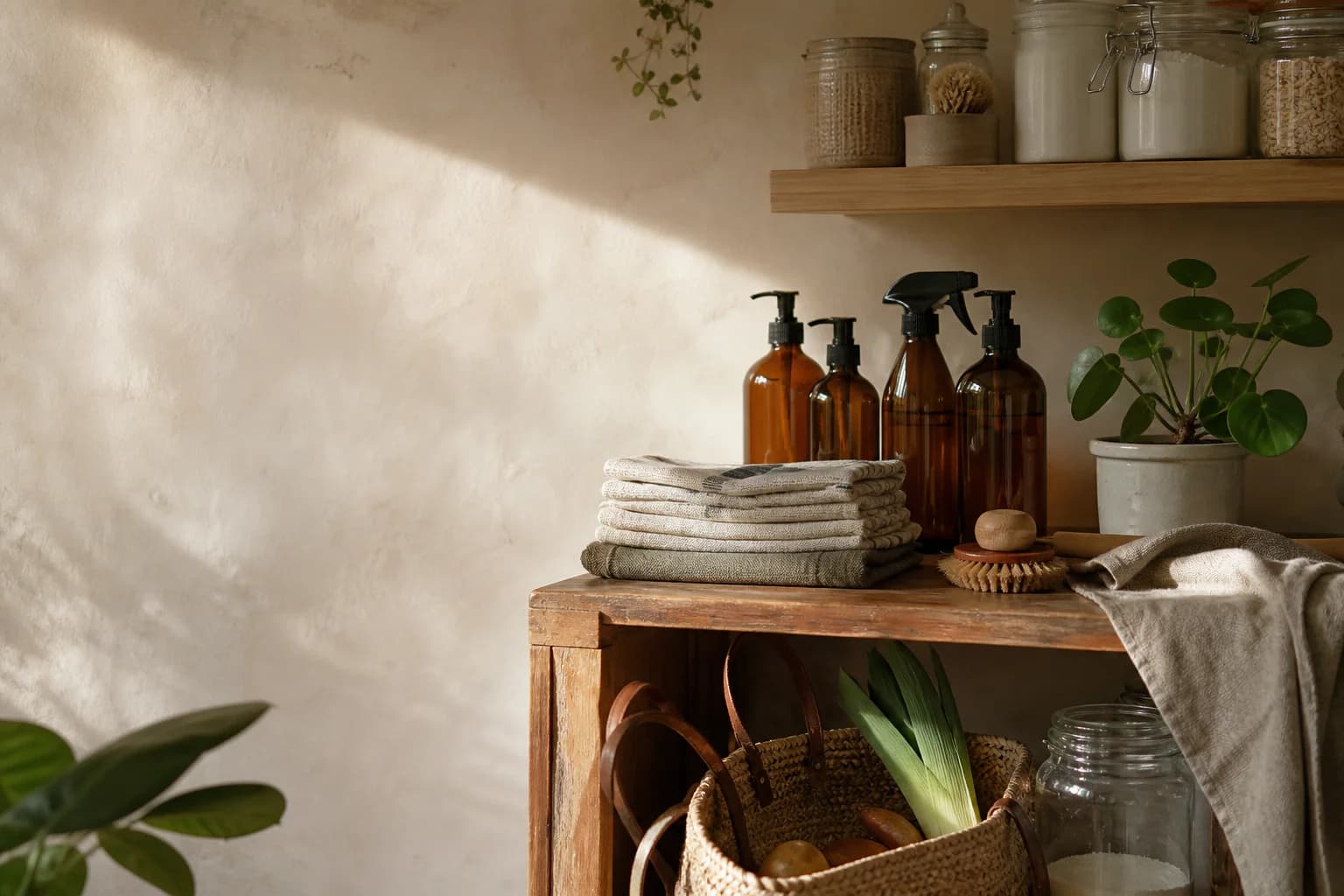
A refill station does not need a label maker and matching amber bottles. It needs one bottle you like using, one place to store the refill, and one low-mess way to mix or pour it. That might be a tray under the sink, a small bin in the laundry area, or one shelf where the bottle, refill pack, and cloths stay together.
The station should help future-you refill the product in under a minute. If the funnel is hard to find, the refill packet gets buried, or the bottle is awkward to grip, the system becomes another stalled good intention. Visible and simple beats polished and complicated.
- Keep the refill and the matching bottle in the same zone.
- Choose a bottle shape that feels comfortable enough to use often.
- Label the bottle clearly if the product is diluted or transferred from another package.
- Store a cloth or sponge nearby so the full task is ready to start.
Write the refill step into the routine
Most refill systems fail for the same reason many low-waste systems fail: the reset step has no home. The cleaner works until the bottle empties, then the packet stays in a drawer and someone buys a conventional replacement because it is faster in that moment. A usable refill routine needs a restock cue before the bottle is completely gone.
Tie the refill step to something that already happens. Refill when the bottle reaches the last quarter. Refill while putting groceries away. Refill during a short Sunday reset. Refill right after the kitchen bin goes out. The cue matters more than the product type because it keeps the system from becoming a scavenger hunt.
A five-minute refill reset
If you want a simple weekly check, keep it small. Look at the bottle level, glance at the backup refill, wipe the tray or bin if needed, and make sure the cloths are still where you expect them. That is enough to keep the system alive.
A refill routine should reduce repeat purchases and cabinet clutter, not create a second household chore. If the reset starts feeling fussy, shrink it until it is easy again.
- Check whether the bottle is getting low.
- Confirm there is one backup refill or concentrate left.
- Put the refill item back in its visible home after using it.
- Replace the cloth or sponge if the job feels half-finished without it.
Keep the system easier than buying another bottle
The strongest refill setup is the one that survives low-energy days. That usually means fewer product categories, fewer decanting steps, and fewer aesthetic decisions. If one all-purpose refill handles most of the week, that may be enough for now. You do not need to replace every cleaner just because the first swap worked.
This is also where buying slowly matters. Test one system before stocking up. A scent you dislike, a bottle that sprays poorly, or a concentrate that feels annoying to mix can end the habit quickly. Learn from one product before expanding the system.
- Start with one refill product before building a full set.
- Keep one backup in reserve instead of bulk-buying months of stock.
- Choose the easiest refill format your household will actually use.
- Replace only the repeated products that create obvious bottle clutter or repeat purchases.
Common mistakes that make cleaning refills annoying
One mistake is making the system too decorative and not functional. Another is choosing a format that clashes with how you actually clean. A third is forgetting the safety side of the routine. Unlabeled bottles, missing directions, and improvised mixing create more risk and confusion than the original product did.
Another common mistake is assuming sustainable means homemade. Many people do better with a clear commercial refill system than with a DIY setup they have to remember, remix, and troubleshoot. If a refill is supposed to save time, it should feel easier than invention.
- Do not transfer products into bottles that will confuse other people in the home.
- Do not mix products or improvise beyond the product directions.
- Do not buy several refill formats before testing one in real life.
- Do not keep a low-waste product that you actively avoid using.
Make the swap boring enough to keep
A successful cleaning refill routine is usually quiet. It looks like one bottle you reach for often, one backup refill in the same spot, one short reset cue, and fewer bulky duplicates under the sink. That is enough to lower waste and friction without turning cleaning into a project about cleaning products.
Start with the bottle you rebuy most, choose the refill format that fits your space and patience, and keep the station easy to reset. If the system stays simple, it has a much better chance of lasting.