Healthy Eating
How to Store Leftovers Safely and Actually Use Them
A practical leftover system with safer cooling, clear labels, and simple meal plans so leftovers get eaten instead of forgotten.
By A Healthy World Editorial Team · June 23, 2026 · 8 min read
Leftovers are supposed to make the next meal easier, but they often become a row of vague containers that nobody trusts or remembers to eat. The problem is usually not that you cooked too much. It is that the food never got a clear plan after dinner. A better leftover routine is simpler: cool food promptly, store it in a way you can actually recognize later, and decide when it will get used before it disappears behind newer groceries.
This article is educational only and is not a substitute for food safety guidance for your situation. FoodSafety.gov and FDA recommend refrigerating perishable food promptly, keeping the refrigerator at 40 F or below, and using shallow containers to help leftovers cool faster. USDA guidance also recommends using refrigerated leftovers within 3 to 4 days or freezing them sooner for longer storage. The goal here is practical: keep leftovers safer, easier to notice, and much more likely to become tomorrow's lunch or a low-effort dinner.
A calmer next step
Get one practical reset each week.
Short routines, useful checklists, and the next guide that fits what you are working on.
Decide the leftover plan before dinner is over
A lot of leftovers get wasted because the decision gets delayed. Everyone finishes eating, the kitchen is half-cleaned, and the remaining food sits in the pan while tomorrow becomes a vague promise. The easiest fix is to decide right away what the extra food is for. Is it tomorrow's lunch, a second dinner later this week, or something better frozen tonight?
This quick decision matters because leftovers work best when they already have a job. A meal-sized lunch portion, a family dinner portion, or a freezer backup is much easier to use than one large container that needs to be opened, evaluated, and divided later when nobody has the energy.
- Choose whether the food is for lunch, another dinner, or the freezer.
- Portion the leftovers in realistic serving sizes instead of one oversized container.
- Store tomorrow's meal where it will be easy to grab first.
Why small portions help
A smaller portion lowers friction twice. It cools faster in storage, and it is easier to reheat without committing the whole household to the same repeat meal. Leftovers become more appealing when they feel ready to use instead of waiting for another round of kitchen work.
Cool and refrigerate leftovers promptly
Food safety comes before organization. FoodSafety.gov and FDA both recommend refrigerating perishable foods within 2 hours, or within 1 hour if the food has been in temperatures above 90 F. That applies to home-cooked dinners, takeout, and restaurant leftovers just as much as it applies to holiday meals.
If a large pot of soup, rice, or casserole needs to cool, divide it into smaller shallow containers instead of putting one heavy pot in the fridge and hoping for the best. Shallow containers help food cool faster and make it easier to stack, label, and scan later.
- Put perishable leftovers away within 2 hours.
- Use the 1-hour rule when food has been out in very hot conditions.
- Split large amounts into shallow containers instead of storing one deep batch.
Put this into practice
Make weekday meals easier with default meals, visible food, and low-energy backups.
Make leftovers easy to recognize and trust
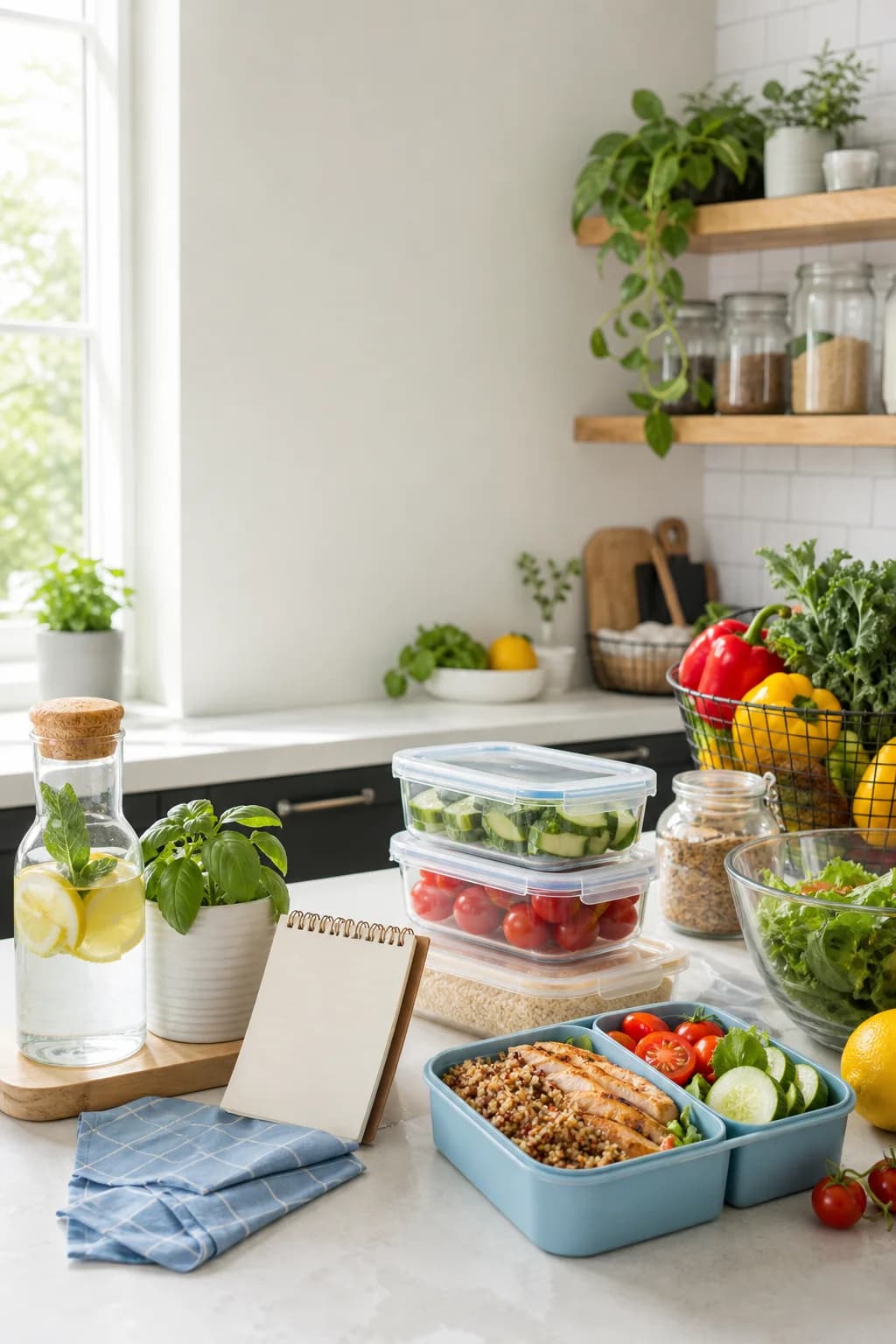
Many leftovers get ignored because nobody can tell what they are. A container of pasta sauce, chili, grains, or roasted vegetables all start to look alike after two busy days in the fridge. Clear containers help, but the bigger win is a quick label with the food name and date.
FDA also advises checking leftovers daily for spoilage and keeping refrigerated foods covered. A simple label makes that easier because you are not relying on memory or smell alone. When leftovers are visible and clearly identified, they are much more likely to become the easiest next option.
What to label every time
You do not need a fancy system. Focus on the containers that are easiest to forget, easiest to confuse, or most likely to get pushed behind newer groceries.
- The food name in plain language.
- The date it went into the fridge or freezer.
- If helpful, a note like lunch, taco filling, or soup night.
Use the 3-to-4-day window to make a real plan
USDA guidance says refrigerated leftovers should generally be used within 3 to 4 days, or frozen sooner if you will not eat them in time. That timeline is easier to follow when you connect leftovers to your actual week instead of just storing them neatly and hoping they disappear naturally.
Think through the next two or three meals as soon as leftovers go away. Maybe roasted vegetables become tomorrow's grain bowl, extra chicken becomes wraps, rice becomes fried rice, or soup becomes the low-energy dinner two nights from now. The point is not to schedule every bite. It is to give the leftovers a likely exit.
- Pick one leftover for tomorrow's lunch before closing the fridge.
- Plan one dinner later in the week that can absorb extras.
- Freeze anything you already know you will not use in time.
Good default leftover meals
Flexible meals keep leftovers moving because they do not need exact ingredients. The best ones work with mixed quantities and ordinary food.
- Grain bowl with leftover vegetables, beans, or protein.
- Wrap, toast, or quesadilla with cooked fillings from dinner.
- Soup, fried rice, pasta, or omelet built from small extra portions.
Freeze extras earlier, not when they already feel unappealing
Freezing is most helpful when you do it while the food still feels worth eating. If you already know the second half of the casserole, soup, cooked beans, or pasta sauce is not getting eaten this week, freeze it now instead of letting it become a fridge guilt project.
The freezer works best as a planned extension of the leftover routine, not a rescue mission. Use containers or bags that fit the portion, press out extra air when appropriate, and label the food so it does not become a mystery later. That turns leftovers into future convenience instead of delayed waste.
- Freeze leftovers in meal-sized or family-sized portions you will realistically use.
- Label freezer items with the name and date.
- Keep the newest frozen leftovers behind or below older ones so the older food gets used first.
Reheat leftovers with the same practical mindset
Reheating should be simple, but it still needs a little care. USDA and FoodSafety.gov recommend reheating leftovers to 165 F. That matters most for the foods people often warm quickly and unevenly, especially in the microwave.
Covering food while reheating can help it warm more evenly and keep it from drying out. If the portion is thick or dense, stir it, rotate it, or check more than one spot before serving. The goal is not to become obsessive about leftovers. It is to keep the routine useful and low-risk.
- Reheat leftovers thoroughly to 165 F.
- Stir or rotate microwave meals so cold spots do not stay hidden.
- Bring soups, sauces, and gravies up to a full hot reheat before serving.
Common leftover mistakes that create waste
One common mistake is storing all leftovers in the original cooking pot. Another is hiding good food in one giant container that nobody wants to tackle for lunch. A third is putting food in the fridge with no date, no plan, and no visible place in the weekly meal flow.
There is also the opposite mistake: keeping leftovers so long that deciding whether they are still safe becomes a guessing game. A better system is calmer and stricter at the same time. Store food promptly, label it clearly, give it a likely next use, and freeze earlier when the week is already too full.
- Do not leave leftovers in deep pots when shallow containers would cool faster.
- Do not rely on memory for what the food is or when it was made.
- Do not keep pushing leftovers behind newer groceries.
- Do not wait until day four to decide whether something should have been frozen.
Keep the leftover routine small enough to repeat
A good leftover system is not complicated. It is a few shallow containers, a marker or label, one visible fridge zone, and a habit of deciding quickly whether food is for tomorrow, later this week, or the freezer. That is enough to reduce waste and make future meals easier without turning dinner cleanup into a second project.
Start with tonight's extras. Pack one lunch portion, label one container, and freeze one portion that clearly will not get eaten soon. If that makes the next meal easier, keep the routine. If it feels fussy, simplify the portion sizes or the number of containers until it fits the kitchen you actually have.