Healthy Eating
How to Reduce Food Waste at Home With a Use-It-First Shelf
A practical kitchen system for using leftovers, planning meals, and reducing food waste with one visible fridge shelf.
By A Healthy World Editorial Team · June 9, 2026 · 8 min read
A lot of food waste is not dramatic. It is the yogurt behind the sauce bottle, the half onion wrapped in hope, the leftovers you meant to eat for lunch, and the greens you bought with good intentions before the week got crowded. A use-it-first shelf gives those foods one visible place to live so the next meal starts with what already needs your attention.
This article is educational only and is not a substitute for food safety guidance. The U.S. Environmental Protection Agency recommends planning, prepping, and storing food to waste less at home, and the USDA advises refrigerating leftovers promptly. The goal here is a simple kitchen system that helps you notice food sooner, use it while it is still good, and spend less money replacing what you already had.
A calmer next step
Get one practical reset each week.
Short routines, useful checklists, and the next guide that fits what you are working on.
Start with one visible shelf, not a full fridge makeover
A use-it-first shelf works because it is small and obvious. You are not reorganizing the entire refrigerator, buying matching bins, or creating a second project for future you. You are choosing one easy-to-see zone for food that should get used before the next shop or before it disappears behind newer groceries.
This matters because wasted food is usually a visibility problem before it becomes a budget problem. If leftovers, opened ingredients, and produce with a short runway all live in different corners, they lose the competition against whatever looks easiest in the moment. One shelf solves that by making the decision simpler: check this spot first.
- Choose one shelf or one bin at eye level if possible.
- Keep the zone small enough that it is quick to scan.
- Treat the shelf as a decision shortcut, not a storage category.
Why one shelf works better than good intentions
A useful kitchen system reduces search time. Instead of opening the fridge and trying to remember what needs using, you give those foods one predictable address. That lowers friction for lunch packing, weeknight cooking, and the quick pre-shopping check that helps you avoid duplicates.
Decide what belongs on the shelf
The use-it-first zone should hold foods that are still good but easier to forget: leftovers, cooked grains, opened dips, cut vegetables, herbs, berries, half-used sauces, or the ingredients from a recipe that only partly happened. It is not a guilt shelf for things you already do not want. It is a practical holding area for food that still has a realistic next use.
You also do not need to move every open item onto it. Keep the shelf focused on foods with a shorter timeline or higher chance of being buried. Stable condiments and long-lasting basics can stay where they already work.
Good shelf candidates
The best candidates are the foods you rebuy by accident or rediscover too late. Start by noticing what your household throws away most often, then build the shelf around that pattern.
- Leftovers you want to eat in the next day or two.
- Prepared ingredients such as cooked rice, chopped vegetables, or washed greens.
- Opened jars, dips, sauces, or broths from this week's meals.
- Produce that is close to losing quality but still easy to use.
Put this into practice
Make weekday meals easier with default meals, visible food, and low-energy backups.
Use containers and labels to remove guesswork
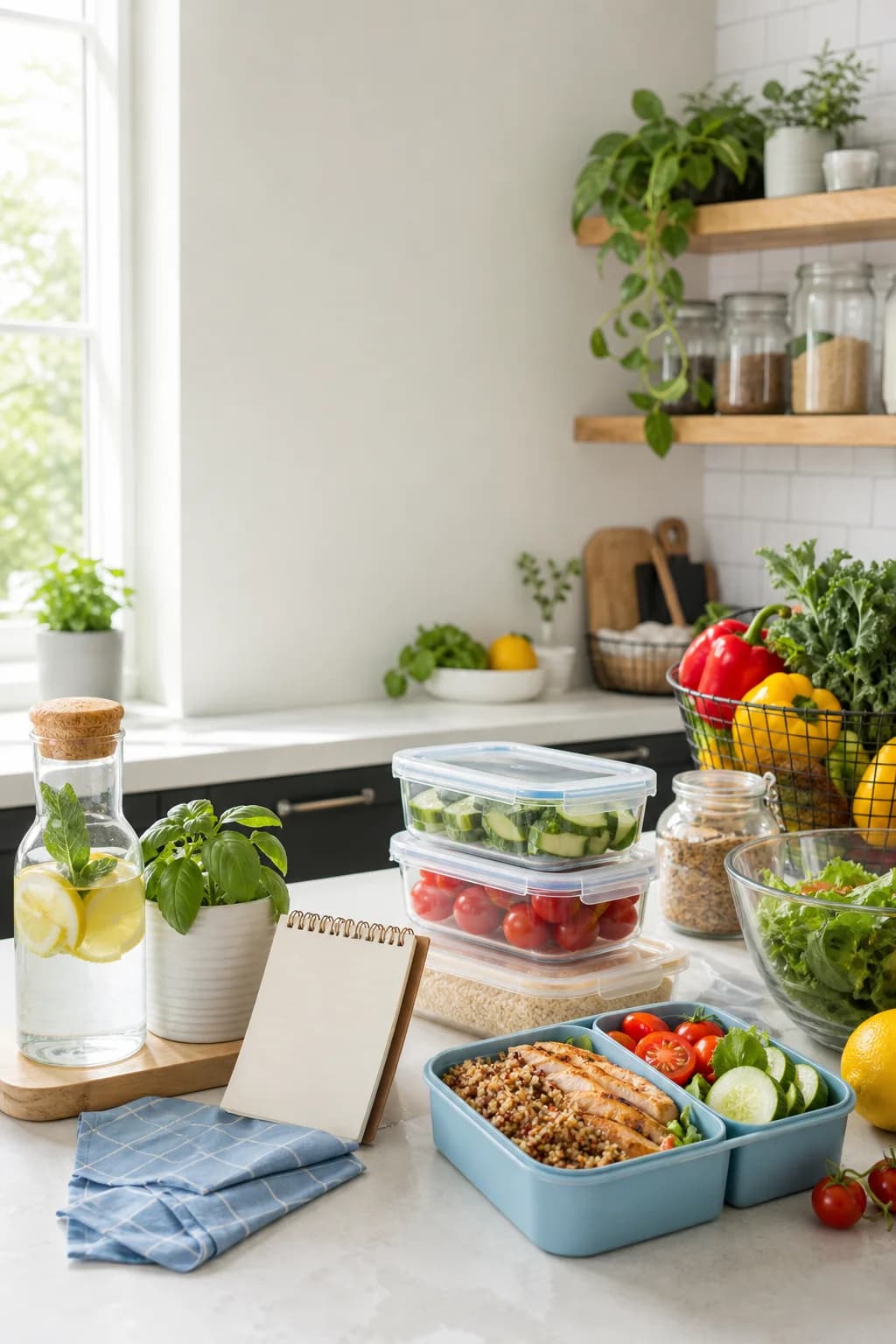
The shelf works best when you can tell what something is without opening three lids and performing memory tests. Clear containers help, but the main goal is speed. If you use opaque containers, add a small label or a scrap of tape with the food name and date. That gives the shelf enough structure to stay useful without turning it into kitchen theater.
Food safety still comes first. The use-it-first shelf is for food you can still use, not food you are keeping out of guilt. Refrigerate leftovers promptly, keep the shelf tidy enough to scan, and if you are genuinely unsure about an item, do not make the shelf responsible for that decision.
- Store leftovers in meal-sized or lunch-sized containers when you can.
- Add a quick label for foods that are hard to identify later.
- Put the newest groceries behind the items that need using first.
Make the next meal easier to start
A labeled container is not just about organization. It shortens the path between noticing food and using it. That matters most on busy evenings, when a visible leftover or prepped ingredient can become the easiest part of dinner.
Build two default meals for odds and ends
The shelf needs an exit strategy. If you only collect food that needs using, you have created a museum of good intentions. Default meals give those ingredients somewhere to go. Pick two flexible formats you already like and repeat them whenever the shelf starts filling up.
Useful default meals are forgiving: grain bowls, wraps, soups, omelets, pasta, snack plates, fried rice, or roasted trays that can absorb one extra vegetable, a leftover protein, or a half jar of sauce. The point is not recipe perfection. The point is making already-bought food easier to turn into dinner.
Keep a short fallback list
A fallback list is especially helpful when the shelf has random odds and ends. If you already know your two or three cleanup meals, you spend less time deciding and more time using what is there.
- Wrap or pita meal: leftovers, greens, sauce, and one filling add-on.
- Bowl meal: grain, vegetables, beans or protein, and a sauce.
- Soup or egg meal: produce, herbs, and small leftover portions that need a home.
Run a five-minute reset twice a week
A use-it-first shelf needs short maintenance, not a dramatic Sunday cleanout. Two fast resets each week are often enough: one in the middle of the week and one before shopping. Move items forward, combine duplicates, freeze what you know you will not use soon, and write one meal idea based on what is sitting there.
This is where the shelf starts saving money. A quick scan before shopping helps you avoid buying another bag of greens, another tub of yogurt, or another sauce when the first one is still waiting in plain sight.
A short reset checklist
Keep the reset small enough that it can happen between ordinary tasks. You are not deep-cleaning the refrigerator. You are making the next few meals easier.
- Check the shelf before the midweek dinner plan.
- Check it again before writing the shopping list.
- Move one or two items into tomorrow's meal plan right away.
- Freeze or discard anything that clearly will not be used in time.
Common mistakes that turn the shelf into clutter
One common mistake is making the shelf too large. If everything qualifies, nothing stands out. Another is using it only for leftovers while the produce drawer keeps hiding the food that actually needs using first. A third is creating the shelf without pairing it with default meals or a pre-shopping check.
There is also the perfection trap. If the shelf only works when the fridge is spotless and the week is unusually calm, it is too fragile. A better system survives ordinary mess, a rushed grocery run, and the nights when cooking needs to be simple.
- Do not let the shelf become the place where food goes to be forgotten more neatly.
- Do not keep unsafe or truly unwanted food there out of guilt.
- Do not buy more storage before testing the habit with what you already own.
- Do not separate the shelf from meal planning and shopping decisions.
Make the system boring enough to keep
A good use-it-first shelf is not impressive. It is one visible zone, a few labeled containers, two default cleanup meals, and a short reset before shopping. That is enough to waste less food without turning the refrigerator into another project.
Start with one shelf this week. Use it to rescue a few leftovers, one vegetable, or one half-used jar before buying more food. If the system makes the next meal easier, keep it. If it feels fussy, shrink it until it fits the kitchen and schedule you actually have.