Movement
How to Take Walking Breaks at Work Without Losing Momentum
A practical walking-break routine for desk workers who want more movement during the workday without disrupting focus.
By A Healthy World Editorial Team · June 11, 2026 · 8 min read
Walking breaks at work sound easy until they collide with meetings, unfinished tasks, awkward office timing, and the feeling that stepping away means falling behind. The version that actually works is usually smaller and less dramatic. It fits inside transitions that already exist, uses short routes, and gives you a clear way back into work instead of turning movement into another thing to manage.
This article is educational only and is not medical advice. The CDC and the Physical Activity Guidelines for Americans note that adults benefit from moving more and sitting less, and that activity can be broken into smaller chunks across the week. If walking causes pain, dizziness, or you have a condition that affects activity, speak with a qualified professional. The goal here is practical: build a walking-break routine that supports a less sedentary workday without making the job harder.
A calmer next step
Get one practical reset each week.
Short routines, useful checklists, and the next guide that fits what you are working on.
Start with one reliable break, not all-day alarms
Many walking-break plans fail because they begin with too much frequency. Hourly reminders, step challenges, and aggressive streak goals can make the workday feel interrupted before the habit has even become useful. A better starting point is one dependable break you can actually picture happening on a normal Tuesday.
For most desk workers, that first break fits best after a meeting cluster, before lunch, after lunch, or right after closing one deep-work block. You are looking for a moment that already has a natural edge. The habit becomes easier when the break belongs to a transition rather than competing with active concentration.
- Pick one walking break that can happen most workdays.
- Attach it to a transition you already notice.
- Keep the first version short enough that you will not argue with it.
Why one break works better at first
One repeatable break teaches you more than a perfect plan on paper. It shows whether the route is practical, whether your shoes or weather setup create friction, and whether the timing actually fits your work. Once that first break feels normal, adding a second one is much easier.
Match the break to the kind of work you do
A walking break should match the shape of your job, not an idealized wellness routine. If your schedule is meeting-heavy, use the gap after two or three calls. If your afternoons blur together, use a short walk as the reset between lunch and the next work block. If you work from home, the break may fit best right before re-entering the house after a pickup, errand, or quick outside task.
The useful question is not when people say you should walk. It is when your own workday already loosens enough for five to ten minutes of movement without causing extra stress.
Examples by work pattern
Different schedules need different anchors. A customer-support role may need shorter and more predictable loops than a project-based role. A remote worker may have more route freedom but also more temptation to skip the transition entirely.
- Meeting-heavy days: walk after a call block or before opening the next agenda.
- Deep-work days: walk when you finish one focused block, not in the middle of it.
- Remote days: use lunch, school pickup, or the end-of-day shutdown as the cue.
- Office days: use the easiest indoor or outdoor loop you can finish without extra setup.
Put this into practice
Build one realistic week with small actions, clear cues, and fallback versions for busy days.
Choose a route with a clear finish line
Walking breaks disappear when the route is vague. If you have to decide where to go every time, how far to walk, whether the weather is workable, or how long you can spare, the break starts to feel optional. A default route fixes that by giving you one answer before the question even comes up.
The best route is usually boring: one building loop, one block pattern, one hallway circuit, one stairs-and-lobby circuit, or one short neighborhood route from home. Clear routes reduce decision fatigue and make the break easier to finish on time.
- Pick one default route for normal days.
- Choose one shorter backup route for rushed days.
- Know roughly how long each route takes before you rely on it.
Use an indoor backup when the weather or workplace is awkward
An indoor backup prevents the habit from disappearing every time conditions are imperfect. That might be a hallway loop, stairs you can use safely, a lap around a large floor, or a covered route near work. The backup does not need to be impressive. It only needs to keep the cue alive.
Make it easy to leave and easy to come back
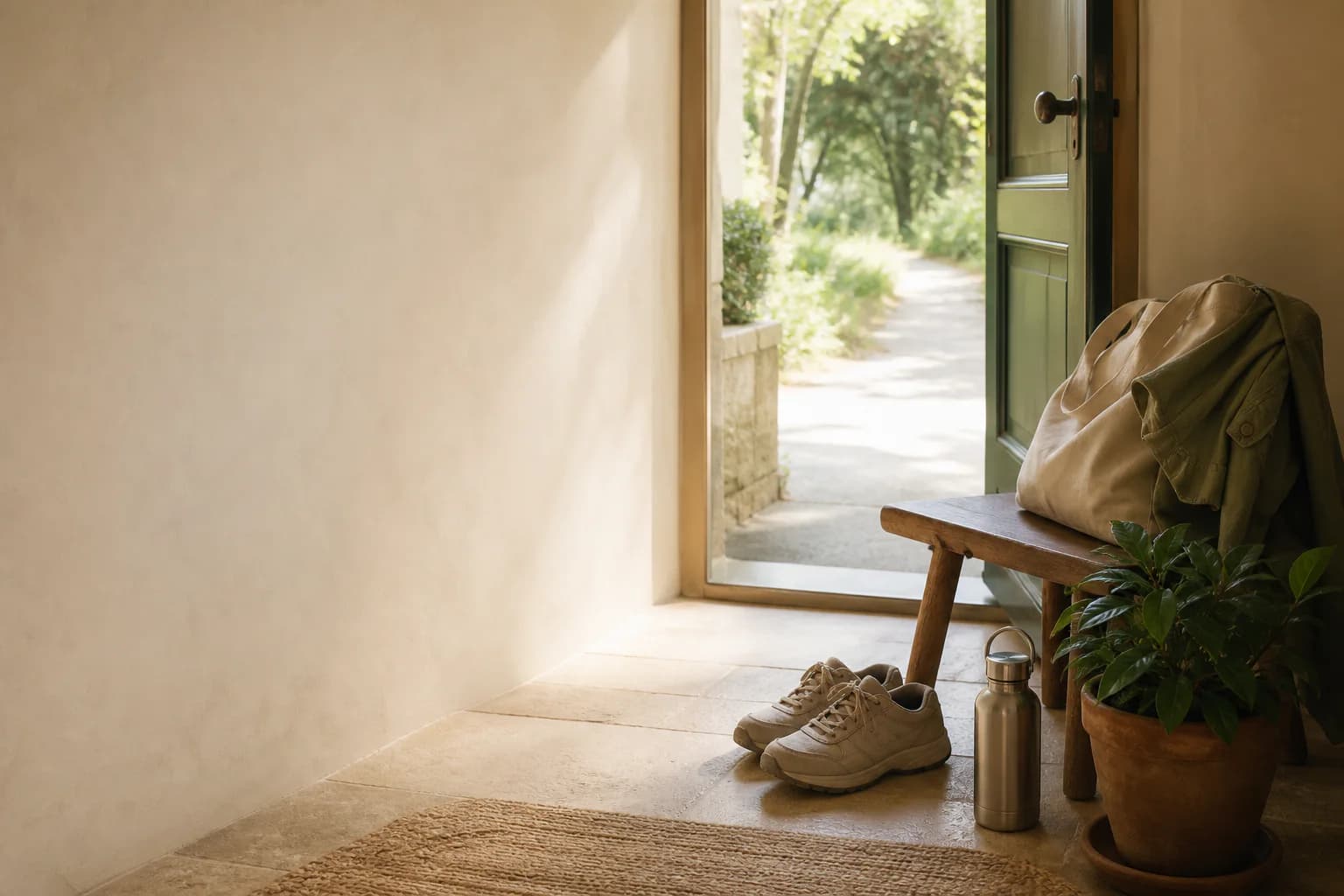
A workday walking break should not require changing into athletic clothes, finding special gear, or rebuilding your desk setup when you return. Lower-friction movement is more likely to happen. Keep shoes, a light layer, and anything else you truly need close enough that leaving takes less than a minute.
The return matters too. If coming back from the break feels messy, the habit starts to seem expensive. Leave yourself a clean restart point: a single next task on the screen, a notebook line with the next action, or a short calendar buffer before the next meeting.
- Keep walking shoes or a weather layer easy to grab if you use them.
- Leave one obvious next task before stepping away.
- Use a one-minute restart ritual when you return.
A simple return ritual
Try a short sequence when you sit back down: drink water, reopen the task you already chose, and spend one minute restarting instead of checking three unrelated tabs. That keeps the break from bleeding into drift.
Use walking for tasks that travel well
Some work moments are easier to pair with movement than others. Audio-only calls, thinking through a problem, listening to voice notes, reviewing a presentation structure in your head, or resetting between tasks can all work well. Screen-heavy work, detailed editing, and anything that needs close visual attention usually does not.
Treat walking as support for the workday, not as a way to force multitasking into every minute. The break is most useful when it either gives you a clean reset or pairs with a task that genuinely travels well.
- Save audio-only calls for walking when that fits your role and setting.
- Use walking for thinking, not for precision screen tasks.
- Respect workplace expectations, privacy, and safe routes.
Build a five-day walking-break rhythm
A simple weekly rhythm keeps the habit from becoming random. Monday can be for re-starting the cue. Tuesday and Wednesday can be for repeating the same route. Thursday can be the day you test the backup route or a second short break. Friday can be the review day when you notice whether the cue still fits.
This kind of structure matters because workweeks are uneven. You do not need the same walking break every day. You need enough repetition to make the cue recognizable and enough flexibility to survive busy afternoons.
A simple workweek checklist
Keep the checklist small enough that it can live beside your calendar, not in a separate productivity system. The point is to help the break happen, not to create more admin.
- Monday: confirm this week's default break and route.
- Tuesday: repeat the same break without changing anything.
- Wednesday: keep the cue even if the walk is shorter.
- Thursday: use the backup route or pair one call with walking.
- Friday: note what timing felt easiest to repeat.
Common mistakes that make walking breaks disappear
One common mistake is making the break too long too early. Another is relying on random motivation instead of a visible transition in the day. A third is choosing a route that is technically possible but too awkward to repeat once meetings pile up.
Another trap is forgetting the return. If every walking break is followed by distraction, email drift, or a late arrival to the next meeting, the habit will start to feel like a cost. The design has to include the way back.
- Do not begin with a length that only fits unusually calm days.
- Do not depend on reminders if you have not chosen a real cue.
- Do not make the route complicated, public, or inconvenient for your setting.
- Do not skip the backup version for rushed days.
Keep the habit small enough to survive real work
A good workday walking habit is not a performance of balance. It is one short break, one default route, one backup route, and one reliable way back into focus. That is enough to make a desk-heavy day feel less still without pretending your schedule is empty.
Start with the smallest version that fits this week. If it helps the day feel better and does not create extra friction, keep it. If it keeps failing, shrink the route, move the cue, or simplify the return. The habit gets stronger when it fits real work, not when it looks ambitious.