Healthy Eating
How to Plan Easy Weeknight Dinners Without Full Meal Prep
A practical weeknight dinner planning routine with repeat meal formulas, smart leftovers, and easy backups for lower-stress home cooking.
By A Healthy World Editorial Team · June 27, 2026 · 8 min read
Weeknight dinner often gets framed as a choice between two extremes: cook from scratch every night with endless willpower, or spend half of Sunday batch-cooking your future. Most households need something smaller. A useful dinner plan is usually a short list of repeat meals, a few prepared components, and a backup that keeps one late meeting or tired evening from turning the whole week into takeout and forgotten groceries.
This article is educational only and is not a substitute for nutrition or food-safety guidance for your situation. EPA guidance recommends checking your refrigerator, freezer, and pantry before shopping and planning meals around what needs using. FDA guidance also recommends keeping perishable foods refrigerated at 40 F or below and refrigerating foods that need chilling within 2 hours. The goal here is practical: make weeknight dinners easier to repeat without turning your kitchen into a full meal-prep project.
A calmer next step
Get one practical reset each week.
Short routines, useful checklists, and the next guide that fits what you are working on.
Start with the weeknights that keep breaking down
Dinner planning works best when it solves a real evening problem instead of an ideal version of home cooking. Maybe you get home late twice a week and need dinner moving in 15 minutes. Maybe one night gets derailed by kids' activities, commuting, or a long work block. Maybe the main problem is not time at all. Maybe dinner ingredients are scattered, leftovers are vague, or every evening starts with the same exhausted question about what is even possible.
That repeated friction matters more than the perfect menu. If you solve the real breakdown point, dinner gets much easier. A household that needs two super-fast dinners needs a different system than one that has time to cook but keeps forgetting what is in the fridge. Start with the weeknight you most want to fix, then build from there.
- Pick one or two weeknights that most often lead to takeout, stress, or wasted food.
- Notice whether the friction is time, planning, visibility, cleanup, or energy.
- Build the first version of dinner planning around those real nights, not the whole week.
A realistic dinner goal is narrow
A narrow goal might be: make Monday dinner easier after groceries, make one low-energy dinner night less chaotic, or stop rebuying ingredients because nothing had a plan. That is enough to guide what you shop for, prep, and keep visible.
Choose three repeat dinner formulas, not seven new recipes
The strongest weeknight dinner plans usually rely on a few familiar formats instead of constant novelty. Think in formulas rather than full recipe projects. That might be a bowl meal, a pasta or soup night, and a wrap, egg, or toast-based dinner. Once the formulas are clear, your shopping list gets smaller and your prep gets more useful because the same ingredients can work in more than one meal.
This also protects the week from mood shifts and missed plans. You may not want the exact same dinner every night, but you probably do not need seven unrelated recipes either. Three repeat formats often create enough variety without asking you to reinvent dinner after work.
- Bowl night: grain or potato, vegetables, beans or protein, and one sauce.
- Quick cooked night: pasta, soup, stir-fry, or skillet meal built from familiar staples.
- Assembly night: wraps, eggs and toast, quesadillas, snack plates, or leftovers turned into a meal.
Boring can be a strength
A repeat dinner is not a failure of creativity. It is infrastructure. The best weeknight meal is often the one you can start on a tired Wednesday without reading a recipe three times or shopping for six special ingredients.
Put this into practice
Make weekday meals easier with default meals, visible food, and low-energy backups.
Plan from your fridge, freezer, and pantry before writing the list
EPA home food-waste guidance recommends looking in your refrigerator, freezer, and pantry first and planning meals around what needs using. That one habit makes dinner planning cheaper and easier because it turns forgotten ingredients into inputs instead of surprises. Before shopping, scan what is already open, what is close to losing quality, and what backup foods are still available.
This does not need to become an inventory spreadsheet. A five-minute check is often enough. Notice the greens that need a dinner, the half jar of sauce, the cooked rice, the tortillas, the soup in the freezer, or the beans already in the pantry. Those clues usually tell you which dinner formulas make sense for the week.
- Check what produce, leftovers, and half-used ingredients need a job first.
- Notice which freezer backups or pantry staples can cover the busiest night.
- Write the list to support meals you can already see, not meals you vaguely hope to make.
A fast pre-shop scan is enough
Ask three questions: what needs using first, what dinner base is already here, and which one or two ingredients would make those foods usable? That simple scan usually leads to better weeknight dinners than starting with recipes in a vacuum.
Prep components that shorten dinner, not a full Sunday production line
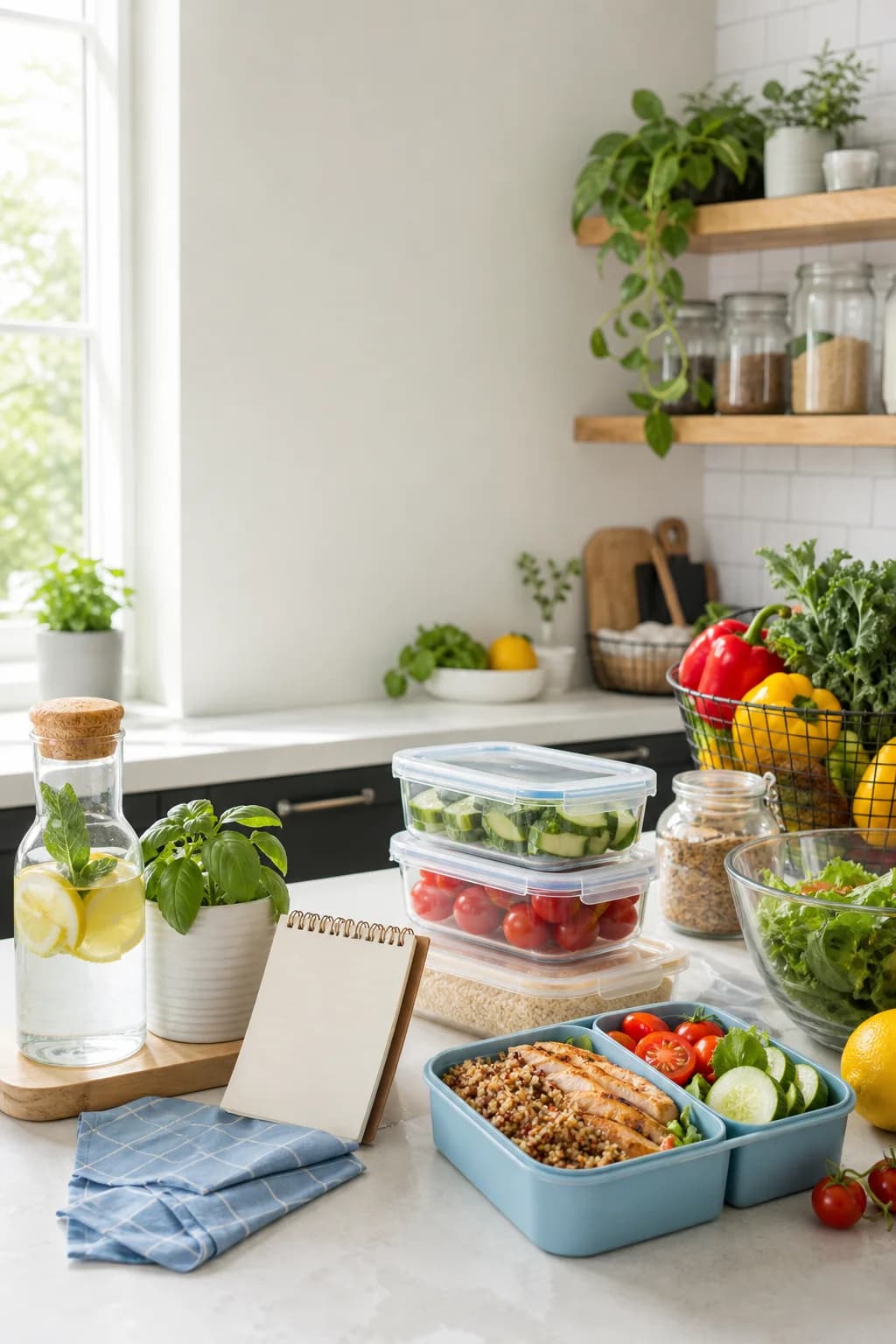
You do not need to fully cook every dinner in advance. Component prep is usually easier to sustain. Wash greens, chop one vegetable, cook one grain, roast a tray of vegetables, mix one sauce, or portion one protein or bean option. Those steps reduce weeknight friction without forcing you into identical dinners for five nights.
Component prep also keeps the food flexible. Cooked rice can become a bowl, a stir-fry base, or a side. Roasted vegetables can go into pasta, wraps, or eggs. Beans can support tacos, soup, or grain bowls. Flexible ingredients reduce waste because they can move with the week instead of becoming abandoned parts of one overplanned meal.
- Prep one base such as rice, potatoes, pasta, or tortillas.
- Prep one produce step such as washed greens, chopped vegetables, or roasted vegetables.
- Prep one filling element such as beans, eggs, tofu, chicken, or a sauce you use often.
When full dinner prep is worth it
Fully prepared dinners can help when one night has almost no cooking window at all. If a soup, tray bake, or freezer portion genuinely saves the most chaotic evening, it can earn its place. The point is using full prep selectively, not assuming every dinner needs to be preassembled.
Keep one dinner backup in each zone
Weeknight dinner planning becomes much more stable when it includes backups across the pantry, fridge, and freezer. A pantry backup might be pasta, canned beans, broth, or tuna. A fridge backup might be eggs, hummus, or yogurt plus simple sides. A freezer backup might be soup, bread, cooked grains, or frozen vegetables. These foods keep dinner moving when the original plan slips.
Backups are not second-best meals for people who failed to prepare properly. They are what protect the week from real life. If dinner only works after a perfect grocery trip and a calm afternoon, the system is too fragile. If it still works when you lean on pantry pasta, eggs, tortillas, soup, or frozen vegetables, it has a much better chance of lasting.
- Keep one 10-minute pantry dinner and one freezer-assisted dinner you already like.
- Choose backups that use ingredients you normally eat, not aspirational health foods.
- Restock the backup after using it so the next busy night is still covered.
Backup is infrastructure, not a compromise
The backup dinner is often the reason the rest of the week stays on track. It prevents the tired-night cascade where one missed dinner leads to wasted produce, another grocery trip, and more decision fatigue tomorrow.
Let leftovers do part of tomorrow's work
A good dinner plan does not end when the meal hits the table. It includes a quick decision about what the extra food is for next. Maybe it becomes tomorrow's lunch, a second dinner later in the week, or a freezer backup. Leftovers are most useful when they already have a job instead of becoming a vague container you rediscover on Saturday.
Food safety still matters here. FDA guidance recommends refrigerating foods that need chilling within 2 hours and keeping the refrigerator at 40 F or below. That matters for cooked grains, roasted vegetables, beans, meat, sauces, and full leftover meals. If you know you will not use a dinner soon, freeze it earlier rather than waiting until it feels questionable.
- Pack one portion for lunch or another dinner before cleanup is fully done.
- Store leftovers in a way you can recognize quickly later.
- Freeze realistic extras instead of hoping the end of the week will become calmer.
Give leftovers a job the same night
A quick plan now saves a second decision later. One labeled portion, one lunch container, or one freezer portion can turn extra food into convenience instead of clutter.
Common mistakes that make dinner planning feel heavier
One common mistake is planning too many one-off recipes that share almost nothing. Another is treating dinner planning like a promise to cook ambitious meals every night, even when the calendar says otherwise. A third is shopping first and planning later, which makes it easier to end up with disconnected ingredients instead of dinners that fit the week.
There is also the perfection trap. If the dinner plan only works when you prep for hours, never eat leftovers, and never have a low-energy day, it is not a useful plan yet. The stronger version is usually quieter: three repeat dinner formulas, one short pre-shop scan, a few prepared components, and a backup that keeps the week moving.
- Do not plan seven unrelated dinners before three reliable ones are working.
- Do not buy ingredients without matching them to a real dinner format.
- Do not ignore the backup meal that saves the busiest night.
- Do not let leftovers sit around without a clear next use.
Try a 15-minute dinner reset before the week starts
A useful dinner system can start with one short reset after groceries come home or before the workweek begins. Check what is already in the fridge, freezer, and pantry. Pick three dinner formulas. Prep one or two components. Confirm one backup meal. That is often enough to make the next few evenings noticeably easier without turning the kitchen into a second weekend job.
Start with the version you can repeat next week. If a 15-minute dinner reset helps you cook at home with less stress, less waste, and fewer last-minute decisions, then it is already doing its job.
- Scan what needs using before writing the final shopping list.
- Choose three repeat dinner formulas for the week.
- Prep one or two components that shorten the hardest night.
- Confirm one pantry or freezer backup before the week starts.