Healthy Eating
How to Prep Simple Grain Bowl Lunches for Work Without Eating the Same Thing Every Day
A practical grain bowl lunch prep routine with flexible parts, safer storage, and easy variations so work lunches stay useful instead of boring.
By A Healthy World Editorial Team · July 28, 2026 · 9 min read
Grain bowl lunches sound healthy and organized until they turn into four giant containers of rice, a pile of damp vegetables, and the feeling that you are eating the same desk lunch on repeat. The version that lasts is usually much smaller. It does not require restaurant-style meal prep or a different sauce for every day. It uses one grain, one protein or bean option, a few vegetables that hold up well, and a packing system that lets lunch stay flexible through the week.
This article is educational only and is not a substitute for food-safety guidance for your situation. FDA guidance says fresh produce should be rinsed under running water before preparing or eating, perishable foods should be refrigerated within 2 hours, and leftovers cool faster in shallow containers. FoodSafety.gov guidance also says leftovers are generally best used within 3 to 4 days, and USDA lunch-packing guidance says perishable lunches stay safer when packed in an insulated bag with cold sources or refrigerated after arrival. The goal here is practical: make grain bowl lunches easier to repeat on workdays without turning them into a bland five-container project.
A calmer next step
Get one practical reset each week.
Short routines, useful checklists, and the next guide that fits what you are working on.
Start with one bowl formula instead of five finished lunches
A lot of grain bowl prep fails because people try to finish every lunch all at once. Five complete bowls can look efficient on Sunday, but they age in the same direction. The grain dries out, the vegetables lose their texture, and the flavor starts feeling repetitive before the week is over. A better system starts with one simple formula and keeps the parts flexible long enough to mix differently later.
That formula can stay basic: grain, protein or beans, vegetables, sauce, and one small topper. Once those roles are clear, you do not need a separate recipe for every lunch. You just need parts that can be combined quickly and still feel good on an ordinary Tuesday.
- Think in parts instead of prepping five identical finished bowls.
- Use one simple formula that can repeat with small variations.
- Let weekday assembly stay fast instead of forcing all the decisions into one prep block.
A simple grain bowl formula
Most work lunches get easier when the bowl has a predictable structure you can assemble without thinking too hard.
- Base: rice, quinoa, farro, couscous, or another grain you already use.
- Filling add-in: beans, lentils, tofu, chicken, eggs, or another familiar protein.
- Vegetables: one or two sturdy vegetables plus one quick fresh add-on.
- Finish: sauce, herbs, crunch, or something acidic to wake it up.
Choose parts that still feel good after a day or two in the fridge
Grain bowls are easiest to repeat when the components are chosen for storage, not just for day-one appearance. Cooked grains, roasted vegetables, beans, slaw mixes, shredded carrots, cucumber packed separately, chickpeas, and simple sauces usually behave better than delicate lettuce, avocado packed too early, or vegetables that release a lot of water into the box.
This does not mean your bowl has to be boring. It means the ingredients need jobs that match the timeline. Some parts are good for the first half of the week, and some are better added the morning of or right before lunch. The more honest you are about that, the less likely the bowls are to become another container of good intentions.
- Favor grains, beans, proteins, and vegetables that hold texture reasonably well.
- Use watery or delicate ingredients in smaller amounts or add them later.
- Choose ingredients you already know how to use in more than one lunch format.
Good first grain bowl parts
Most people do well with fairly boring ingredients at first because boring ingredients usually travel and store better.
- Rice, quinoa, or couscous for the base.
- Roasted sweet potatoes, broccoli, peppers, carrots, or cabbage slaw for vegetables.
- Beans, lentils, baked tofu, shredded chicken, or hard-boiled eggs for substance.
- A sauce, lemon wedge, seeds, nuts, or crunchy chickpeas packed separately.
Put this into practice
Make weekday meals easier with default meals, visible food, and low-energy backups.
Prep components in separate containers instead of locking every bowl too early
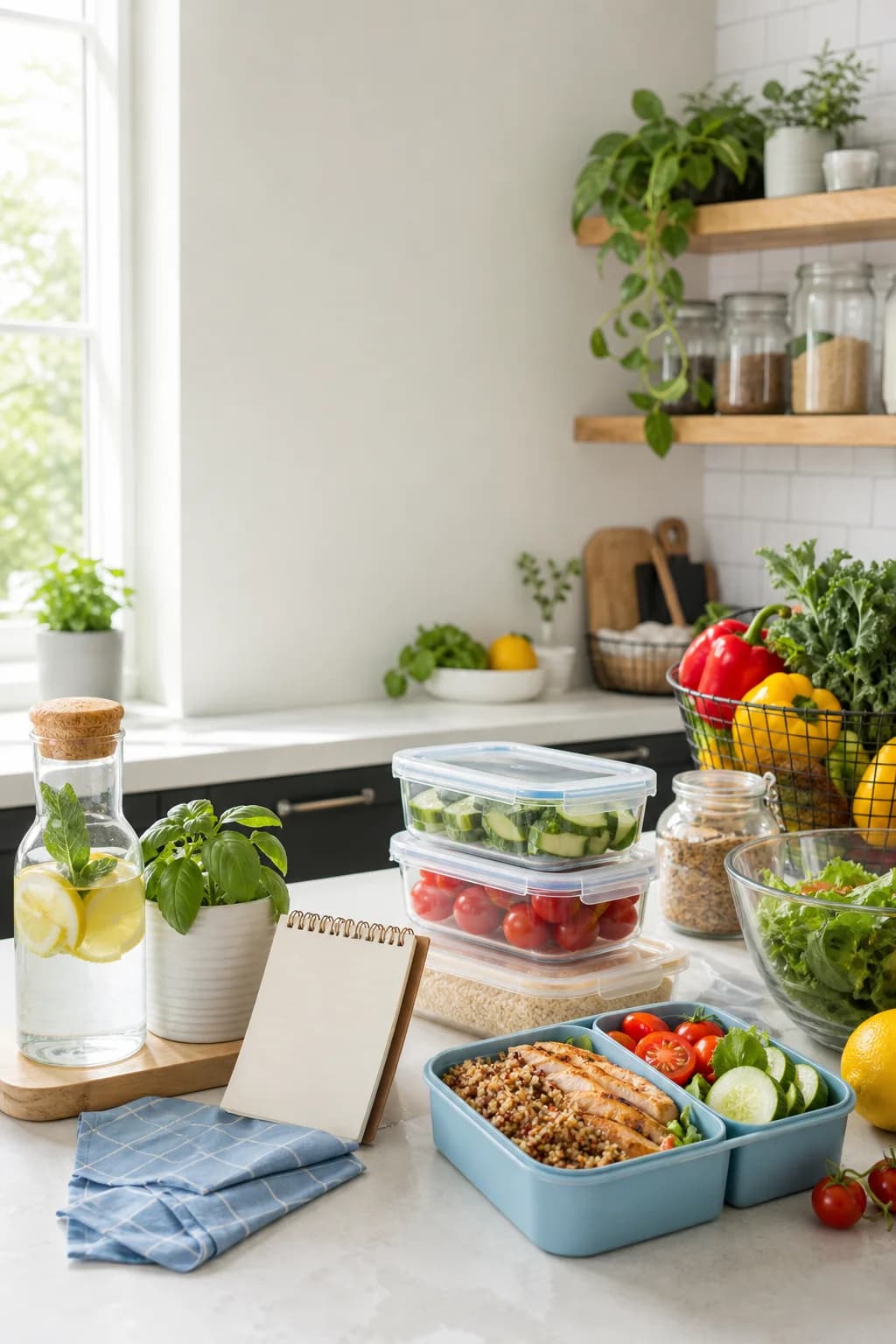
Component prep gives grain bowls a longer useful life. If the grains, protein, vegetables, and sauce each have their own container, you can build two lunches one way and the third lunch another way without re-cooking anything. That is usually more realistic than stacking finished bowls and hoping you will still want the exact same lunch on day four.
This also helps with food safety and quality. FDA and FoodSafety.gov guidance on prompt refrigeration and shallow storage applies here too. When hot grains or cooked proteins are portioned into smaller, shallower containers, they cool faster and are easier to pack later. Separate storage also makes it easier to notice when one component should be used first.
- Store cooked grains and proteins in smaller containers so they cool and pack more easily.
- Keep sauces and crunchy toppings out of the main container until later.
- Assemble only the number of bowls you actually need in the next day or two.
What can be assembled ahead
You do not have to keep every single part separate forever. Dryer combinations often hold up well for the next day.
- Cooked grain plus roasted vegetables.
- Beans or chicken plus grain when both are already chilled promptly.
- A lunch box with sauce packed separately.
- A partly assembled bowl for tomorrow, with fresh herbs or crunchy items added later.
Use flavor switches so the same base does not become the same lunch
Many grain bowl routines get boring because the ingredients are too similar day after day, not because grain bowls are inherently repetitive. One base can still produce different lunches if the finishing layer changes. A lemony herb bowl, a peanut-style bowl, and a salsa or yogurt-based bowl can share grains and vegetables while tasting noticeably different.
This is where a small amount of planning helps more than more cooking. Instead of making three entirely different lunches, make one neutral base and choose two or three finish directions. That creates variety without multiplying the grocery list or the prep mess.
- Keep the grain and protein fairly neutral so the flavor can change later.
- Use sauces, herbs, pickled items, or crunchy toppings to create variety.
- Change one or two finish elements instead of rebuilding the whole lunch.
Three easy finish directions
The goal is not gourmet range. It is enough change that lunch still feels worth eating.
- Lemon and herb: lemon juice, parsley, seeds, and a simple vinaigrette.
- Warm and savory: tahini, roasted vegetables, beans, and a little spice blend.
- Fresh and punchy: salsa, slaw, avocado added the same day, or a yogurt-based sauce.
Pack grain bowls on a short timeline and keep perishable parts cold
A grain bowl can look sturdy, but it still counts as a perishable lunch when it includes cooked grains, beans, eggs, meat, dairy, or cut vegetables that need refrigeration. FoodSafety.gov guidance says leftovers are generally best used within 3 to 4 days, and USDA lunch guidance says insulated bags with cold sources help keep perishable lunches safer through the commute and morning. If you arrive at a workplace refrigerator, move the lunch there when you can.
This matters because meal prep can create false confidence. A bowl is not automatically fine just because it was packed neatly. If cooked parts sat out too long, stayed warm too long before refrigeration, or spent the morning without a cold plan, the pretty container does not fix that. The strongest routine is the one that treats lunch packing as part of safe storage, not a separate task.
- Refrigerate cooked grains, proteins, and other perishable parts within 2 hours.
- Use shallow containers when hot cooked components need to cool before storage.
- Use prepared grain bowl components on a short refrigerator timeline.
- Pack perishable lunches in an insulated bag with cold sources or refrigerate them after arrival.
A simple safety boundary
If you are unsure whether a cooked component was cooled promptly or is already too old, do not build the lunch around it. Grain bowl prep works best when it catches food early, not when it tries to rescue questionable leftovers.
Build two dependable bowl combinations and one backup lunch
Two bowl combinations are usually enough for a workweek. That might be a rice bowl with beans and roasted vegetables plus a quinoa bowl with chicken and chopped vegetables. When the structure is familiar, lunch gets easier to pack and easier to shop for. When everything changes every day, the system gets heavier than it needs to be.
A backup matters too. Some days you will not want the bowl you planned. A sandwich, snack box, salad, soup, or freezer lunch can keep the week from feeling trapped by your own prep. The backup is not wasted effort. It is what keeps grain bowls from having to do every lunch job perfectly.
- Pick two bowl combinations that share ingredients without tasting identical.
- Use overlapping grains, vegetables, and sauces so shopping stays simple.
- Keep one non-bowl backup lunch in the system for variety and lower-energy days.
Example workweek combination
A small rotation often works better than a full menu plan.
- Two lunches: rice, black beans, peppers, slaw, and salsa or yogurt sauce.
- One lunch: quinoa, roasted vegetables, chickpeas or chicken, and lemony dressing.
- One backup: sandwich, salad, soup, or freezer leftover when the bowl plan stops sounding good.
Run a 20-minute grain bowl reset instead of a giant Sunday project
You do not need a marathon prep session to make grain bowl lunches easier. A short reset can do most of the job: cook one grain, prep one protein or bean option, wash or portion a couple of vegetables, and mix one sauce. That is enough infrastructure for several lunches without turning the kitchen into an assembly line.
A short reset also reveals where the real friction lives. Maybe the grain is easy but the sauce step is what gets skipped. Maybe you do better with one fully packed bowl for tomorrow and loose components for later. Maybe the problem is not the cooking at all, but forgetting to chill the lunch bag and cold packs. Smaller prep makes those weak points easier to see and fix.
- Cook one grain and one filling add-in first.
- Prep only enough vegetables and sauce for the next few lunches.
- Pack tomorrow's bowl first, then store the remaining parts for later assembly.
- Reset the lunch bag, containers, and cold packs before the next workday.
Common mistakes that make grain bowl lunches boring or annoying
One common mistake is finishing every bowl too early, then blaming grain bowls when the texture fades. Another is choosing ingredients that are healthy in theory but not appealing at a desk on a normal workday. A third is forgetting that crunchy, acidic, or fresh elements often need to stay separate if you want the lunch to taste alive later.
Another trap is asking one lunch format to carry the whole week. Grain bowls are useful because they are flexible, not because they should replace every other work lunch. The better system is quieter: one bowl formula, a few dependable parts, a short safety timeline, one or two flavor switches, and a backup lunch when you want something different.
- Do not prep five identical bowls if you usually get bored by repetition.
- Do not mix watery vegetables, sauce, and crunchy toppings into every container too early.
- Do not treat cooked grain and protein like shelf-stable ingredients.
- Do not skip the backup lunch that keeps the week feeling flexible.
Make grain bowl lunches simple enough to keep using
A useful grain bowl routine is not about proving how organized you are. It is about making lunch easier with one grain, one filling option, a few vegetables, and enough variation that you still want the food by midweek. When the parts are visible, the sauces stay separate, and the storage timeline is realistic, grain bowls can do a lot of work without becoming another food project.
Start with two grain bowl lunches this week, not five. Keep the parts that make lunch calmer, drop the parts that create sogginess or boredom, and let the system stay smaller than your most ambitious meal-prep plans.
- Use one simple bowl formula instead of five separate lunch recipes.
- Keep the best-storing parts ready and add fresher finishers later.
- Use short storage timelines for cooked and perishable components.
- Let two good lunches count before expanding the routine.