Healthy Planet
How to Stop Using Disposable Cleaning Wipes Without Making Everyday Cleaning Harder
A practical low-waste cleaning-wipe replacement routine with simple cloth zones, easy spray setup, and realistic backup rules for messier jobs.
By A Healthy World Editorial Team · August 13, 2026 · 9 min read
Disposable cleaning wipes feel convenient until the canisters pile up under the sink, half-dry packs get forgotten, and every quick counter wipe starts depending on one more repeat purchase. The version that lasts is usually much smaller. It does not try to replace every cleaning product in the house. It builds one ready-to-grab setup for the wipe jobs that happen all the time and keeps a narrow backup lane for the situations where you do not want to improvise.
This article is educational only and is not a substitute for product labels or household safety guidance for your situation. CDC guidance says cleaning with soap, water, and scrubbing removes germs and that disinfecting at home is likely not needed unless someone is sick or at higher risk of getting sick. FoodSafety.gov says kitchen surfaces, dishes, utensils, and cutting boards should be washed with hot, soapy water and dish cloths should be washed often in the hot cycle of the washing machine. EPA also says disinfectants work according to their label directions and that users should read and understand the product label before using them. The goal here is practical: replace the wipe habit where it makes sense, keep the setup simple, and avoid turning everyday cleaning into a bigger project.
A calmer next step
Get one practical reset each week.
Short routines, useful checklists, and the next guide that fits what you are working on.
Start with the wipe job you repeat most
The easiest disposable-wipe swap starts with the task that already happens several times a week. Maybe that is a quick kitchen counter wipe after breakfast, the bathroom sink at night, the dining table after lunch, or the spot near the coffee maker that always ends up sticky. Those jobs teach you much more than occasional deep-cleaning days because they show whether the replacement is actually faster to grab, use, and reset.
Starting smaller matters because wipes often stand in for speed, not only for cleaning power. If you begin with a vague promise to stop buying wipes entirely, every awkward mess starts feeling like a test of commitment. A better first step is asking which repeated wipe-down would still feel easy with a cloth and cleaner nearby.
- Choose one wipe-heavy job that already happens most weeks.
- Start where speed matters more than perfect aesthetics.
- Judge the first week by ease, not by total wipe elimination.
A boring first target usually works best
Daily crumbs, water marks, fingerprints, and light bathroom splashes are better teachers than the biggest mess in the house. If the simple cleanup works, you can decide later whether the system should expand.
Separate everyday cleaning from disinfecting before you buy anything
Many people reach for disposable wipes because the product category quietly blends ordinary cleaning with disinfecting. CDC draws a clearer line: in most home situations, cleaning alone with soap and water can remove most germs, and disinfecting is more relevant when someone is sick or at higher risk of getting sick. That distinction matters because it lets your everyday setup stay simpler.
A reusable replacement usually works best when it handles ordinary dirt, spills, and high-touch surfaces that just need regular cleaning. If you reserve disinfecting for the smaller set of situations that actually call for it, you do not have to force one product or one wipe habit to do every job in the house.
- Use the daily setup for ordinary wipe-downs, crumbs, splashes, and visible dirt.
- Treat disinfecting as a separate task instead of the default for every surface.
- Keep product instructions easy to find when a label-directed disinfecting step is needed.
Why this split makes the swap easier
If every cleanup has to answer a disinfecting question first, the new routine will feel heavy fast. A simpler system is one everyday cleaner for repeated messes and one clearly limited disinfecting lane when the situation really calls for it.
Put this into practice
Build one realistic week with small actions, clear cues, and fallback versions for busy days.
Build a ready-to-grab replacement that is as fast as the old wipe tub
Disposable wipes win when the alternative lives in three different places. If the cloths are in the laundry room, the spray is under another sink, and the used cloth has nowhere obvious to go, the old canister will keep winning. The replacement needs to remove steps, not add them.
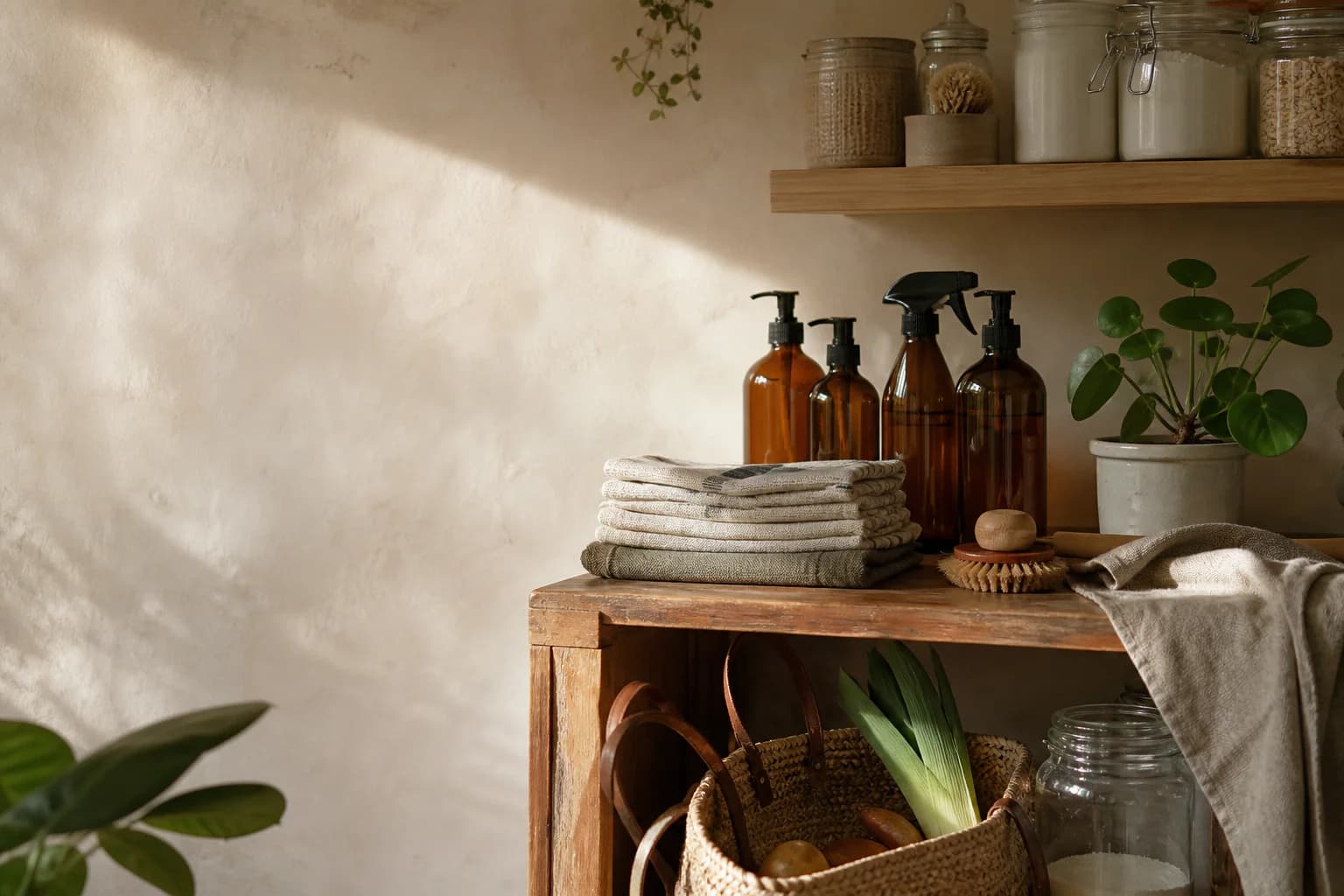
A stronger setup is small and local. Keep a short stack of washable cloths or rags where the wipe job starts, pair them with a cleaner that fits the surface and the job, and make the used-cloth landing spot easy to reach. This can be as simple as a small bin under the bathroom sink or a kitchen tray that holds the cloth stack and spray together.
- Store the cloths in the room where the wipe-down actually happens.
- Pair the cloth stack with one cleaner you already like using for that job.
- Keep the setup compact enough that it feels easier than opening a new canister.
A simple starter kit
You do not need a matching set of specialty cloths. A few washable cloths, one clearly labeled cleaner, and one drop spot for used cloths is enough for a useful first test.
- One small stack of washable cloths or rags.
- One all-purpose or surface-appropriate cleaner for the target job.
- One small container, hook, or bin for used cloths.
Give used cloths a clear path so the system does not become sink clutter
Many reusable cleaning systems fail at the aftercare step, not at the cleaning step. The cloth works, then it stays draped over the faucet, tossed on the counter, or crumpled in the sink until the whole setup feels damp and irritating. The easier move is giving the used cloth one defined next stop.
That stop can be a mesh bag in the laundry area, a small lidded bin under the sink, or a hook where a cloth can dry before washing. The exact container matters less than the fact that the cloth is no longer deciding its future on your countertop.
- Choose one landing spot for used cloths before starting the swap.
- Let cloths dry or air out when that helps prevent musty pileups.
- Keep the used-cloth route simple enough for low-energy days.
Smaller cloth counts often work better
A huge cloth stash can hide a broken routine for weeks. A smaller set shows quickly whether you are resetting often enough and whether the storage spot is actually convenient.
Keep food-prep cleanup straightforward and easier to trust
Kitchen wipe habits get more complicated when they overlap with food prep. FoodSafety.gov says countertops, cutting boards, dishes, and utensils should be washed with hot, soapy water, especially after contact with raw meat, poultry, seafood, or eggs, and that dish cloths should be washed often in the hot cycle. That does not mean every kitchen wipe has to become a dramatic sanitation routine. It does mean the kitchen setup should stay clear enough that you trust it.
Many households do better with a simple split: one cloth set for ordinary counters, tables, and non-food-prep wipe-downs, and a more deliberate cleaning process for food-prep messes. The goal is not color-coded perfection. It is reducing the hesitation that comes from wondering whether the cloth in your hand is the right one for the job.
- Use hot, soapy water for kitchen surfaces and tools after food-prep messes.
- Wash dish cloths often enough that the kitchen setup still feels trustworthy.
- Separate light wipe-down cloths from messier kitchen or bathroom jobs when that helps.
Simple zones beat mystery cloths
Even a rough split, such as kitchen cloths in one drawer and bathroom or general cleaning cloths in another, can make the routine easier to repeat without second-guessing.
Keep one narrow disposable backup lane for the jobs you do not want to improvise
A reusable routine does not have to mean you never touch a disposable wipe again. Sometimes the most durable low-waste system includes a smaller backup for very specific situations, especially if someone in the household is sick or if you need a product with clear label directions for disinfecting. CDC says disinfecting becomes more relevant when someone is sick, and EPA says disinfectant products should be used according to their label directions.
That is why it helps to define the exception lane in advance. If you want a disposable or label-directed disinfecting option for a short list of jobs, make it explicit. The reusable system handles ordinary daily cleaning. The backup handles the narrower situations where you would rather follow the product directions exactly than force the low-waste version.
- Keep the backup limited to the situations you can name clearly.
- Read and follow the label when using disinfecting wipes or other disinfectants.
- Do not let the backup canister quietly become the default again.
Why a backup can help the main habit last
All-or-nothing systems often collapse when the first unpleasant or higher-stakes cleanup appears. A narrow exception lane can protect the reusable routine by keeping the everyday version realistic.
Run a five-minute wipe reset once or twice a week
The strongest wipe replacement habit usually survives because it has a reset, not because the products are exciting. A short check once or twice a week is enough for most homes: restack clean cloths, move the used ones toward the wash, glance at the cleaner level, and wipe the tray or bin if it is collecting residue.
This small reset also tells you what is actually failing. Maybe the cloths are fine but the bathroom never has enough clean ones. Maybe the spray works but the used-cloth drop spot smells stale. Maybe the whole system is good except for one room where the cloths are always too far away. That is useful information, and it shows up faster in a small routine than in a bigger cleaning overhaul.
A simple wipe-reset checklist
Keep the reset short enough that you would still do it on a busy week.
- Restack a few clean cloths where the wipe-down starts.
- Move used cloths to the wash or their drying spot.
- Check whether the cleaner is nearly empty.
- Wipe the tray, bin, or sink area if residue is building up.
- Notice whether one room needs a smaller or simpler setup.
Common mistakes that make the switch annoying
One common mistake is replacing the wipe canister with a more complicated version of the same dependence. If the cloth routine needs too many steps, it will not feel like a convenience swap. Another mistake is assuming every reusable cloth has to do every job. That creates ambiguity instead of confidence.
A third mistake is letting the low-waste goal blur the safety side of the routine. EPA notes that disinfectant products need to be used according to their directions for use, including where they can be used and how long the surface should stay wet when contact time matters. If a product has important instructions, the sustainable choice is still the correctly used choice.
- Do not hide the cloths farther away than the old wipes.
- Do not ask one cloth system to cover every mess without any boundaries.
- Do not improvise with disinfecting products when the label gives clear directions.
- Do not keep buying backup wipes for convenience if the real issue is missing clean cloths.
Make the swap boring enough to keep
A useful alternative to disposable cleaning wipes is usually quiet. It looks like one or two repeated cleaning jobs, one easy cloth stack, one cleaner that fits the job, and one reset cue that keeps the whole thing from drifting back into canister clutter. That is enough to cut repeat purchases and plastic packaging without turning the sink area into another management problem.
Start with the room where wipes disappear fastest. Keep the reusable version small, fast, and obvious. If the setup still feels easier than buying another tub, it has a much better chance of lasting.
- Choose one repeated wipe-down job first.
- Keep the cloth, cleaner, and used-cloth path in the same zone.
- Reserve disinfecting for the narrower situations that actually need it.
- Let a small reliable system count.