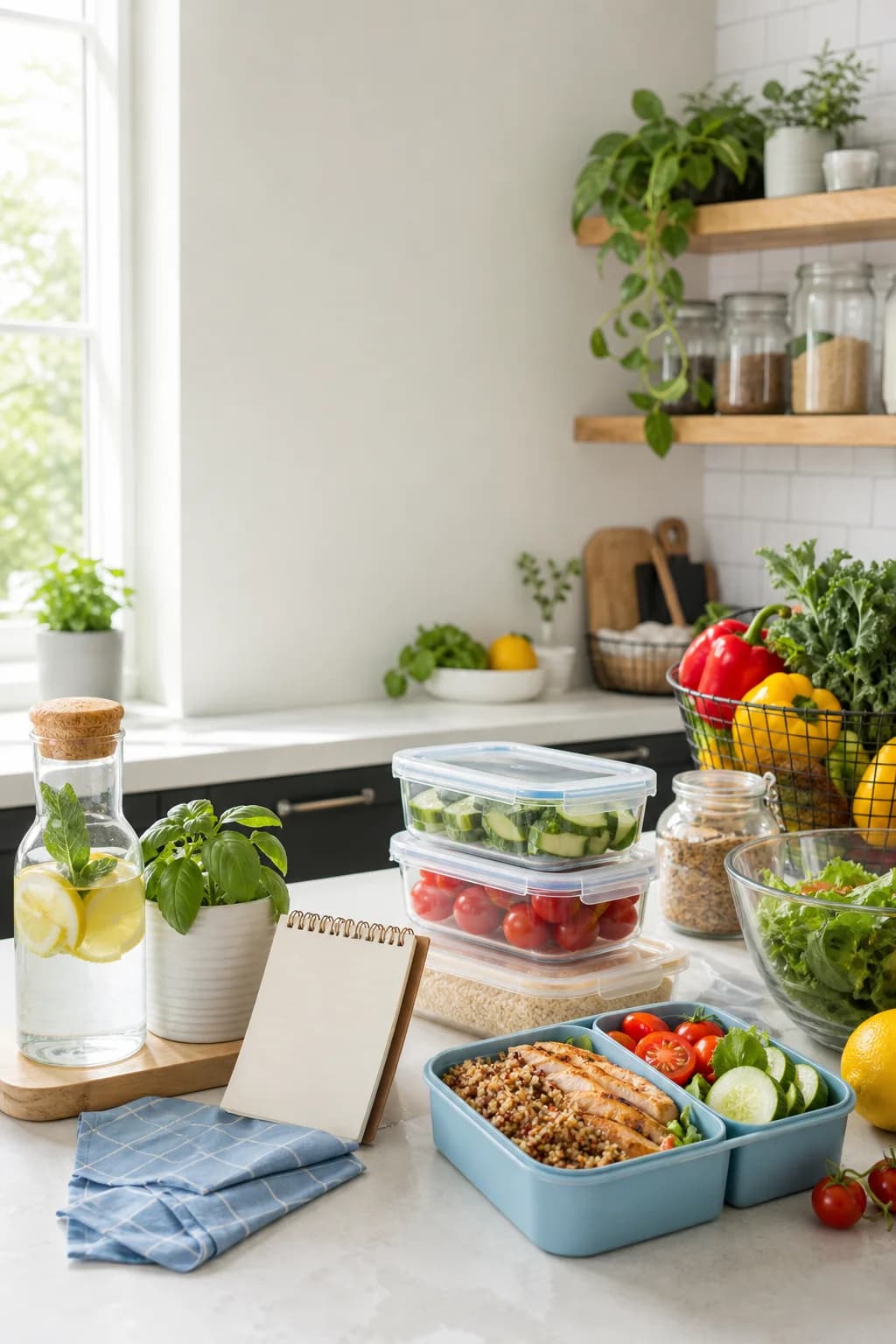
Healthy Eating
How to Do a Nightly Kitchen Reset Without Turning Evenings Into Cleaning Sessions
A practical nightly kitchen reset routine for leftovers, counters, dishes, and next-day meals without turning evenings into cleaning sessions.
By A Healthy World Editorial Team · October 9, 2026 · 8 min read
A nightly kitchen reset sounds useful until it becomes one more thing standing between you and the end of the day. After dinner, dishes, lunch boxes, crumbs, leftovers, and tomorrow's first decisions can all pile up at once. The helpful version is not a spotless kitchen. It is a short closing routine that makes the next meal easier to start.
This article is educational only and is not a substitute for food-safety guidance, product labels, appliance manuals, or cleaning advice for your household. FDA guidance recommends refrigerating perishable foods promptly and keeping the refrigerator at 40 F or below, and FoodSafety.gov reminds home cooks to clean surfaces and store leftovers in shallow containers. The goal here is modest: close the kitchen well enough that tomorrow is less chaotic without turning every evening into a cleaning session.
A calmer next step
Get one practical reset each week.
Short routines, useful checklists, and the next guide that fits what you are working on.
Define what reset means before you start cleaning
A nightly kitchen reset is not a deep clean, a pantry reorganization, or proof that the day went perfectly. It is a short sequence that protects food, clears the most useful surfaces, and leaves one obvious next step for tomorrow. If the routine tries to do more than that, it will start to feel like a second shift.
Choose a finish line you can recognize. For most busy kitchens, that means leftovers handled, sink or dishwasher decision made, counters safe enough for breakfast, and one small cue for the next meal. The floor, cabinets, junk drawer, and mystery shelf can wait for a different day.
- Reset means safe leftovers, usable surfaces, and a calmer morning.
- It does not mean every dish is finished or every shelf is organized.
- Use a timer if the routine tends to expand.
- Stop when the next meal has a clear place to begin.
Handle leftovers first so food does not drift
Leftovers are the most time-sensitive part of the reset. Before wiping counters or negotiating pans, decide what is being saved, what is becoming lunch, what can be frozen, and what should be discarded. This keeps cooked food from sitting out while everyone works around it.
Use shallow containers for larger portions so food cools more predictably in the refrigerator. Label the meal or date if the container will not be obvious tomorrow. A plain label like soup for lunch or rice for bowls is enough. The point is to make the food usable, not to create a filing system.
- Move perishable leftovers into containers before starting lower-priority cleanup.
- Portion tomorrow's lunch while the food is already out.
- Freeze realistic extras early if the fridge is crowded.
- Put use-soon items together so they do not disappear behind newer food.
A two-minute leftover scan
Ask three questions: will this be eaten tomorrow, should it be frozen, or is it not worth saving? That tiny decision point prevents the fridge from filling with hopeful containers nobody wants to open later.
Put this into practice
Make weekday meals easier with default meals, visible food, and low-energy backups.
Make one surface ready for the next meal
A kitchen can be imperfect and still be ready. Instead of trying to restore every surface, choose the surface that matters most for tomorrow: the breakfast counter, coffee area, lunch-packing spot, cutting board zone, or the small stretch beside the stove. Clear that area first.
Cleaning and sanitizing are not the same thing. For ordinary crumbs and splashes, cleaning the surface may be enough. If a surface touched raw meat, poultry, seafood, eggs, or their juices, follow appropriate sanitizing guidance for that surface and product. Keep this practical: one safe prep zone is more useful than a vague promise to clean everything later.
- Clear the breakfast or lunch-packing area before less important surfaces.
- Put knives, boards, and containers back where tomorrow-you expects them.
- Wipe visible crumbs and spills before they become sticky morning friction.
- Use sanitizing steps when the surface actually needs them.
Choose the dish strategy that fits the night
The dish plan should match the energy available. Some nights the dishwasher gets loaded and started. Some nights the sink gets staged so morning cleanup is not worse. Some nights the biggest win is soaking the pan that would otherwise become tomorrow's problem.
Make the decision once instead of debating every item. If you have a dishwasher, scrape and load dishwasher-safe basics. If you hand wash, group items and use a basin or plugged sink when that helps. If the night is too full, protect the morning by stacking like with like, soaking the pan, and keeping the counter clear enough to function.
- Full version: load or wash the everyday dishes and reset the sink.
- Medium version: load the dishwasher, soak the hardest pan, and leave one tidy stack.
- Minimum version: scrape plates, contain the mess, and clear the main prep surface.
- Do not hand wash everything before running a dishwasher load.
Set up one cue for tomorrow's food
A reset becomes more valuable when it leaves a tiny bridge to the next day. That bridge might be a thawing reminder, lunch container, breakfast bowl, grocery note, or use-it-first item placed at eye level. You are not planning the whole day. You are removing one decision from the next hungry moment.
This is where the routine supports healthier eating without turning into formal meal prep. If tomorrow's breakfast, lunch, or dinner has one visible clue, you are less likely to start from zero. A container of leftovers near the front of the fridge can matter more than a detailed menu.
- Put tomorrow's lunch container near the front of the fridge.
- Move one breakfast item into view.
- Write one missing grocery item before you forget it.
- Place the food that needs using first where it will be seen.
Try a 12-minute nightly kitchen reset
A time box keeps the routine honest. Twelve minutes is long enough to make a visible difference and short enough that it does not become a whole evening identity. Adjust the time if your household is larger, but keep the order: food safety first, function second, polish last.
If you share the kitchen, split the routine by jobs instead of standards. One person handles leftovers, one handles dishes, one clears the surface, or one sets up tomorrow's cue. Clear jobs prevent the reset from becoming one person's invisible chore.
- Minutes 0-3: store leftovers, label use-soon food, and pack one lunch if obvious.
- Minutes 3-7: choose the dish strategy and handle the sink or dishwasher.
- Minutes 7-10: clear and wipe the main prep surface.
- Minutes 10-12: set one cue for breakfast, lunch, dinner, or the grocery list.
Avoid the mistakes that make kitchen resets feel heavy
The first mistake is expanding the reset into a full cleaning session. The second is saving dishes before saving food. The third is expecting the kitchen to look unused, which is a hard standard in a real home that cooks, packs lunches, and stores leftovers.
A better standard is useful and repeatable. Store the food, clear the surface that tomorrow needs, choose a dish plan, and leave one visible cue. If the kitchen supports breakfast or lunch without a small morning crisis, the reset did its job.
- Do not reorganize cabinets during a nightly reset.
- Do not let leftovers sit out while you chase a spotless sink.
- Do not make the routine depend on high energy every night.
- Do not treat a minimum reset as failure; it is what keeps the habit alive.
Keep the reset small enough to repeat
The best nightly kitchen reset is boring in a good way. It repeats the same few decisions until the kitchen stops feeling like a fresh problem every morning. Food goes away, one surface comes back, the sink has a plan, and tomorrow has a cue.
Start with the smallest version you would actually do tonight. Once that feels normal, add only the steps that make the next day easier. A kitchen reset should give time back to the week, not quietly take over the evening.