Movement
How to Build a Weekend Walking Routine Without Turning It Into a Big Fitness Project
A practical weekend walking routine for busy people who want more movement on Saturdays or Sundays without losing half the day.
By A Healthy World Editorial Team · August 19, 2026 · 9 min read
Weekday walking can fall apart when work, commuting, family logistics, or plain tiredness keep squeezing the margin out of the day. Then the weekend starts to look like the obvious fix. The problem is that many people respond by making the weekend walk too ambitious. It becomes a long scenic outing, a full fitness project, or one more thing that competes with errands, rest, and real life. A more useful weekend walking routine is smaller, clearer, and easier to begin even when the day is not perfectly open.
This article is educational only and is not medical advice. CDC guidance and the Physical Activity Guidelines for Americans say adults benefit from moving more and sitting less, that some physical activity is better than none, and that activity can be broken into smaller chunks across the week. If walking causes pain, dizziness, or you have a condition that affects activity, speak with a qualified professional. For route safety, NHTSA guidance also supports using sidewalks when available, crossing at crosswalks or intersections when possible, and staying more visible when walking near traffic in low light. The goal here is practical: build a weekend walking routine that fits your actual Saturdays or Sundays instead of turning movement into another all-or-nothing plan.
A calmer next step
Get one practical reset each week.
Short routines, useful checklists, and the next guide that fits what you are working on.
Start with the part of the weekend that is already predictable
Weekend routines break when they are built around fantasy time. People picture a long peaceful walk at exactly the moment the house is finally quiet, the weather is ideal, and no one needs anything. Real weekends are usually less tidy. They include errands, laundry, social plans, family needs, late starts, and the simple desire to rest.
That is why the best first question is not how far you should walk. It is which part of the weekend already has enough shape to hold a walk. That might be after breakfast on Saturday, before the grocery trip, after church, while a child is at an activity, after lunch on Sunday, or before you settle in for the evening. A routine gets stronger when it belongs to a weekend moment you can actually recognize.
- Look for a repeated weekend transition instead of a fully open block of time.
- Choose the day that is usually more predictable, not the day that looks best in theory.
- Build the first version around one visible cue you already notice.
Good weekend cues to test first
The easiest cue is often attached to something that already happens most weekends.
- After breakfast before the day scatters.
- Before or after one regular errand.
- Right after lunch while energy still feels usable.
- Before the evening settles into screens or chores.
Choose a walk that fits the weekend you actually want
A weekend walking routine should support the kind of weekend you want, not quietly make it harder. If you want the walk to feel restorative, choose a route that feels calm and easy to start. If you want it to help you get out of the house before the day disappears, choose a route close to home. If you want it to blend with errands, choose a route that starts near one of those stops.
This matters because people often choose routes that sound healthy but do not match the job. A 70-minute trail drive is not a practical answer if what you need is a 20-minute reset that still leaves room for groceries and downtime. The first routine should feel sustainable, not heroic.
- Match the route to the role: reset, errand buffer, family time, or fresh-air break.
- Keep the start point close enough that leaving feels easy.
- Let the first version be shorter than your ideal version.
Put this into practice
Build one realistic week with small actions, clear cues, and fallback versions for busy days.
Give the walk one clear job
Weekend walks are easier to protect when they do something useful besides checking a health box. The walk might help you wake up before a busy Saturday, separate home chores from the rest of Sunday, create a screen break, add movement before a long drive, or give you a calmer transition between social plans and home time.
Purpose matters because weekends have more competition from optional activities. When the walk has one simple role, it is easier to choose than a vague idea that you should probably be more active.
- Use the walk as a reset before errands or visitors.
- Use it as a bridge between one part of the weekend and the next.
- Keep the job simple enough that the walk stays easy to start.
Examples of useful weekend roles
A useful role does not need to be dramatic. It only needs to fit the day well enough that you want to keep it.
- A quiet solo reset before the household gets noisy.
- A partner or family catch-up that gets everyone outside.
- A short decompression walk after a crowded errand run.
- A Sunday transition that keeps the whole day from becoming sedentary.
Lower friction before the weekend starts
A weekend walking habit often succeeds or fails before the weekend arrives. If your shoes are buried, you have no default route, the stroller or bag is not ready, or you still need to decide whether the walk happens before or after errands, the routine becomes easy to postpone.
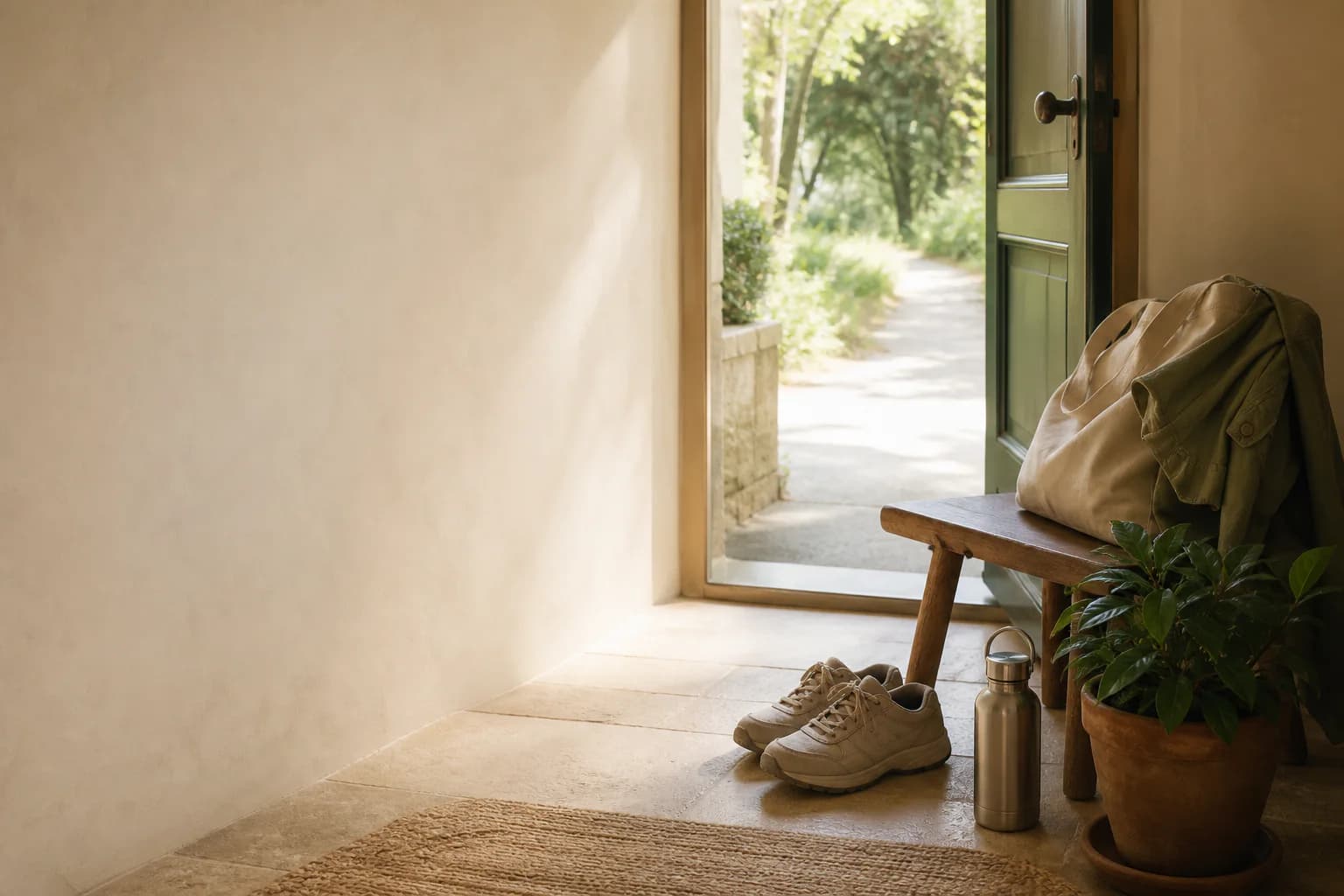
Most people do better when a few decisions are made in advance on Friday or the night before. Put the shoes where you will see them, decide the route, choose the cue, and know what the shorter backup will be if weather or timing change. Preparation turns the weekend walk into the easier option instead of one more choice to negotiate.
- Keep shoes, light layers, and any small essentials in one visible place.
- Choose one default route before the weekend begins.
- Decide whether the walk happens before, during, or after the weekend task around it.
Build a normal version and a fallback version
Weekend routines still need a backup. The day may start later than expected. Rain may show up. Family plans may shift. You may sleep badly and still want the habit to count without forcing a full route. A normal version and a fallback version keep the routine from becoming all or nothing.
The normal version might be 20 to 30 minutes on your usual route. The fallback might be 10 minutes, one shorter loop, or a walk attached directly to an errand parking lot, market stop, or nearby block. The backup is not a lesser routine. It is what keeps the weekend walking identity intact when the day gets messy.
- Choose one standard weekend walk and one shorter fallback.
- Let the fallback count on purpose when timing or energy changes.
- Use the same cue even when the route gets smaller.
A simple weekend split
Most people do better when both versions are clear before the weekend starts.
- Normal version: 20 to 30 minutes on the default route.
- Busy version: 10 to 15 minutes before the next obligation.
- Low-energy version: one short loop that keeps the cue alive.
Let the routine flex around errands, weather, and other people
Weekend movement does not need to be isolated from the rest of life to count. If walking with a partner, child, dog, or local errand makes the habit easier to repeat, that can be a strength rather than a compromise. The key is protecting the walk from becoming so complicated that it disappears under logistics.
The same goes for route conditions. NHTSA pedestrian guidance makes the safety side simple: use sidewalks when available, cross carefully at intersections or crosswalks, and stay more visible in low light. If traffic, heat, rain, or timing make the original route awkward, change the route instead of scrapping the cue.
- Let errands support the walk when that lowers friction.
- Use a safer, simpler route if visibility or traffic feels worse than expected.
- Shorten or move the walk instead of canceling the whole routine.
Try a two-weekend walking reset
You do not need a perfect long-term plan to learn whether weekend walking fits. Test it for two weekends. The first weekend is for choosing the cue, route, and fallback. The second weekend is for repeating the same structure with one small adjustment if needed. That is enough to see whether the cue makes sense, whether the route is too ambitious, and whether the fallback is realistic.
A short test also keeps the habit from becoming one more project you have to manage. You are looking for a repeatable pattern, not an inspiring one-time outing.
A practical two-weekend checklist
Keep the plan small enough that you can actually use it.
- Weekend 1: choose the cue, the route, and the fallback version.
- Weekend 1: notice what almost stopped the walk from happening.
- Between weekends: move shoes, route, or timing to reduce that friction.
- Weekend 2: repeat the same cue and use the fallback if needed without treating it as failure.
- After weekend 2: keep the version that felt easiest to begin.
Common mistakes that make weekend walking harder than it needs to be
One common mistake is expecting the weekend walk to make up for a whole sedentary week. That usually adds too much pressure and turns a useful routine into an oversized event. Another mistake is choosing the route by aspiration instead of convenience. A beautiful route that takes planning may be less repeatable than a plain route you can start in five minutes.
Another trap is waiting for the weekend to calm down before deciding whether to walk. The calmer moment often never arrives. The stronger routine starts earlier, uses a visible cue, and accepts shorter versions when life stays busy.
- Do not make the walk so long that it competes with the rest of the weekend.
- Do not rely on a fully open day if your weekends rarely work that way.
- Do not treat the fallback version as a failed version.
- Do not keep an unsafe low-light or high-traffic route just because it was the original plan.
Use the weekend as a bridge, not a pressure test
A useful weekend walking routine can do two things at once: give you more movement on the days with a little more flexibility, and make walking feel more normal across the rest of the week. That is enough. The weekend does not need to rescue your entire fitness plan.
Start with one cue this week, one route, and one fallback. If that version fits your real Saturday or Sunday, keep it. A smaller walk you can repeat is usually worth more than a bigger one you only manage when the weekend is unusually empty.
- Choose one weekend cue you can recognize easily.
- Keep one standard route and one shorter backup.
- Use the walk for one clear job instead of making it a whole fitness project.
- Keep the version that fits your actual weekends best.