Movement
How to Walk More While Running Errands Without Making Every Trip Take Longer
A practical errand-walking routine for adding more steps through grocery trips, pickups, and short stops without turning every outing into a project.
By A Healthy World Editorial Team · August 22, 2026 · 9 min read
A lot of walking advice quietly assumes you have spare time waiting to be claimed. Many people do not. What they do have are repeated errands: grocery pickups, pharmacy runs, post office stops, quick returns, or one or two small things they need before the day is over. That is why errands can be such a useful place to build more movement. They are already part of life. The goal is not turning every stop into a fitness challenge. It is using a few ordinary trips to add walking without making the whole day less efficient.
This article is educational only and is not medical advice. CDC guidance says adults should aim for at least 150 minutes of moderate-intensity physical activity each week, and the Physical Activity Guidelines for Americans also emphasize moving more and sitting less throughout the day. NHTSA pedestrian safety guidance says walkers should use sidewalks when available, cross at crosswalks or intersections, and stay alert around traffic. If walking causes pain or you have a condition that affects movement or balance, speak with a qualified professional before changing your routine. The practical goal here is smaller: make one or two everyday errands carry more walking than they do now.
A calmer next step
Get one practical reset each week.
Short routines, useful checklists, and the next guide that fits what you are working on.
Start with the errands that are already easiest to stretch
Trying to turn every errand into a walking errand is the fastest way to make the idea annoying. A bulk grocery trip, a stop that requires heavy bags, or a time-sensitive pickup may not be the best place to begin. The more useful starting point is the errand that already has a little flexibility built in. That might be picking up two or three items, returning something small, dropping off mail, or combining a quick stop with a short loop before heading back to the car.
This matters because walking habits stick better when they fit the errand instead of competing with it. You are not trying to prove dedication. You are choosing the version of the trip that can hold a little more movement without creating resentment.
- Choose the errand that already feels light, local, or somewhat flexible.
- Skip the heavy-load or rushed trip for your first test.
- Build the walking habit around one repeated errand category before expanding.
Good starter errands
The best starter errand is usually the one that is small enough to walk a little more without needing a full wardrobe change or extra recovery time.
- A short grocery top-up instead of the biggest weekly haul.
- A pharmacy, library, or post office stop with one small bag.
- A nearby pickup where you can park once and add a short loop.
Make the walking part part of the route, not an extra decision
Errand walking works best when the movement is built into the trip before you leave. If you decide in the parking lot whether you feel like walking more, the answer will often depend on mood, weather, and impatience. A much better approach is to decide the walking version in advance. That could mean parking once and visiting two nearby stops on foot, choosing the farther end of a large lot, or planning a one-block loop before heading back home.
The useful mindset is route design, not willpower. Once the walking is part of the route, you stop negotiating with yourself at every stop. The trip simply has a walking version and a shorter backup version.
- Choose one default errand route that includes a short walk on purpose.
- Use the same parking spot or loop often enough that it becomes familiar.
- Keep a shorter backup route for rushed days instead of skipping the habit entirely.
Put this into practice
Build one realistic week with small actions, clear cues, and fallback versions for busy days.
Use simple prep so the trip stays fast
A lot of people assume walking errands take too long when the real problem is loose prep. If the list is vague, the bags are missing, the shoes are uncomfortable, and you are improvising the whole outing, even a small walking version starts to feel inefficient. Most of that friction is easy to reduce before you leave.
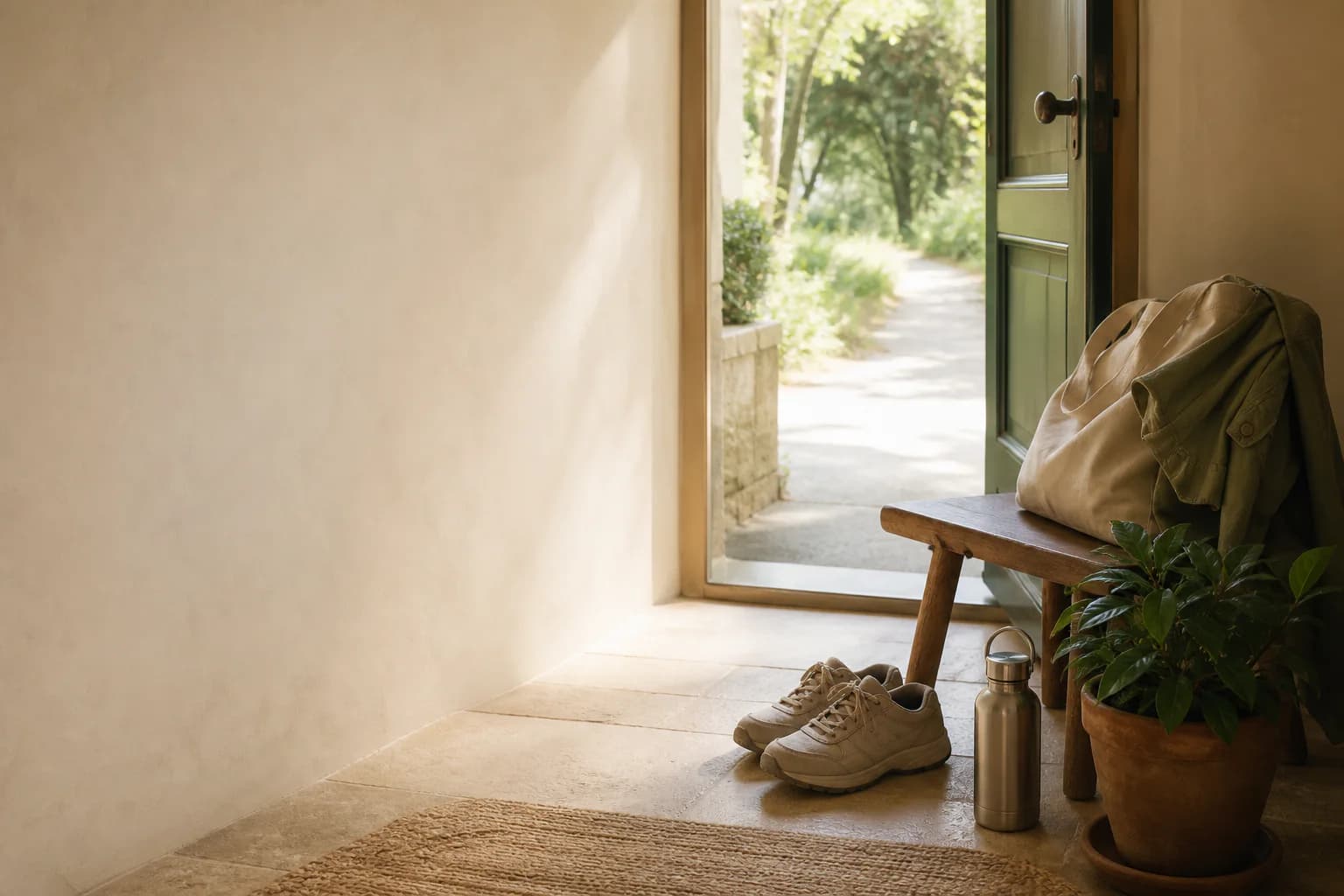
Keep the setup boring and obvious. Write the short list first. Put the bag by the door if you need one. Wear shoes you can comfortably walk in rather than shoes that make you want the closest possible parking spot. The goal is not special gear. It is removing the little annoyances that turn a five-minute walking add-on into a messy trip.
What useful prep can look like
You do not need a full routine. You need enough structure that the walking version does not create extra chaos.
- Keep the errand list short and specific so you do not wander the store.
- Use the same reusable bag, crossbody bag, or backpack for light trips.
- Leave one pair of comfortable walking shoes easy to grab near the door.
Look for built-in walking you can stack onto the stop
Some errands already contain natural walking opportunities if you stop treating the outing as only parking-to-door-to-home. A grocery trip can include one extra lap through the shopping center before getting back in the car. A pickup can include walking to a second nearby stop instead of moving the car. A local errand can become a short neighborhood loop before you head home.
This is where errand walking becomes especially useful for people who do not want a formal workout plan. The trip already has a purpose. The extra walking simply makes the purpose carry more movement.
- Park once when two nearby stops can be combined on foot.
- Add one short loop before heading back to the car or house.
- Use local errands as a reason to stay on your feet a little longer instead of sitting again immediately.
Think in loops, not heroic distances
A useful loop might be five to ten extra minutes, not a major detour. Small loops are easier to repeat on ordinary weekdays and are less likely to make the errand feel like a burden.
Keep carrying, weather, and timing realistic
The habit works better when you respect the limits of the errand instead of pretending every trip should become more active. If you are buying heavy items, dealing with extreme weather, hurrying to a pickup window, or walking after dark in an area that does not feel safe, the shorter or non-walking version may be the right call. A realistic movement habit survives because it adapts.
This is one reason errand walking often works better with smaller trips than with the biggest weekly shop. The load is lighter, the timing is more forgiving, and the walking part does not disappear under the practical demands of the outing.
- Use lighter errands for walking and heavier errands for efficiency.
- Shorten the route in heat, rain, or low-energy conditions instead of abandoning the idea entirely.
- Treat the walking version as flexible infrastructure, not a rule you must obey.
Use pedestrian safety rules that keep the habit calm
Errand walking only helps if it stays practical and safe. NHTSA's pedestrian guidance is straightforward: use sidewalks when available, cross at crosswalks or intersections, and stay alert around traffic. That matters even more in parking lots and shopping areas where people are distracted, reversing, or trying to cut across quickly.
The calmer version is usually the better version. Put the phone away while crossing. Choose the better-lit route if the trip runs later than expected. If there is no sidewalk, walk facing traffic and as far from traffic as practical. The point is not walking everywhere at all costs. It is making the errand version of walking easy to trust.
- Use sidewalks whenever they are available.
- Cross at crosswalks or intersections instead of cutting diagonally through traffic.
- Stay off the phone while crossing lots and streets.
- Choose the better-lit route or skip the walking version when visibility is poor.
Try one errand anchor for a week before adding more
CDC guidance and the Physical Activity Guidelines both support the idea that activity can be spread through the week rather than saved for one perfect session. That makes errand walking useful: one or two small trips can contribute to a larger weekly pattern without demanding a new workout identity. But the habit is still more likely to last if you start with one anchor instead of five.
Pick the errand that repeats most predictably and test only that one for a week. Notice whether the route, shoes, timing, or carrying setup needs adjustment. Once the walking version feels normal, then add a second anchor.
A simple 7-day errand walking test
Keep the first week practical enough that you can learn from it instead of grading it.
- Pick one repeat errand and decide what the walking version looks like.
- Choose the default route and one shorter backup version.
- Keep the shoes and bag easy to grab before the trip.
- Notice what actually slowed the outing down, if anything.
- Keep only the version that still feels useful by the end of the week.
Aim for more walking from ordinary life, not perfect active errands
A strong errand walking routine usually looks modest from the outside. You park once instead of twice. You take one short loop before heading home. You choose the lighter trip for the walking version and skip the heavy one. None of that looks dramatic, but it is exactly why the habit can keep working on a normal Tuesday.
If walking more has felt hard because it always seems to require extra time, errands can be one of the most honest places to start. Use the trips that already belong to your life, make the walking part simple enough to repeat, and let the weekly total grow from there.
- Start with one errand that already has room for a little more walking.
- Build the route in advance so the habit does not depend on mood.
- Keep the walking version light enough that it still respects time, weather, and safety.
- Let repeated ordinary trips do more of the work.